E-Collars Can Protect Maine’s Fragile Eco-Systems
Maine’s beaches aren’t just beautiful, they’re active, living ecosystems.
There’s growing tension around access to Maine’s beaches with our dogs, and both sides of the debate make valid points: Maine is a living, changing ecosystem that deserves protection, yet off-leash freedom with our canine companions feels essential to how many of us experience these landscapes. Rather than choosing sides, we should seek balance — embracing responsible tools and practices that allow us to enjoy the coast without harming it.
I encourage dog owners to explore the use of E-collars as one reliable method to strengthen communication and control, reducing conflicts with wildlife and other beach users while preserving the joy of off-leash exploration. If we recognize the power we have as individuals to protect fragile ecosystems and commit to clear, consistent stewardship and training, we can maintain access to Maine’s wild places for people and dogs alike.

Using a granular system such as the Mini Educator is just one series of this tool that reinforces your line of communication with your dog while they’re off leash on Maine’s Beaches.
Two of the most sensitive and protected species you’ll encounter along our coast are:

Piping Plover (state & federally threatened)
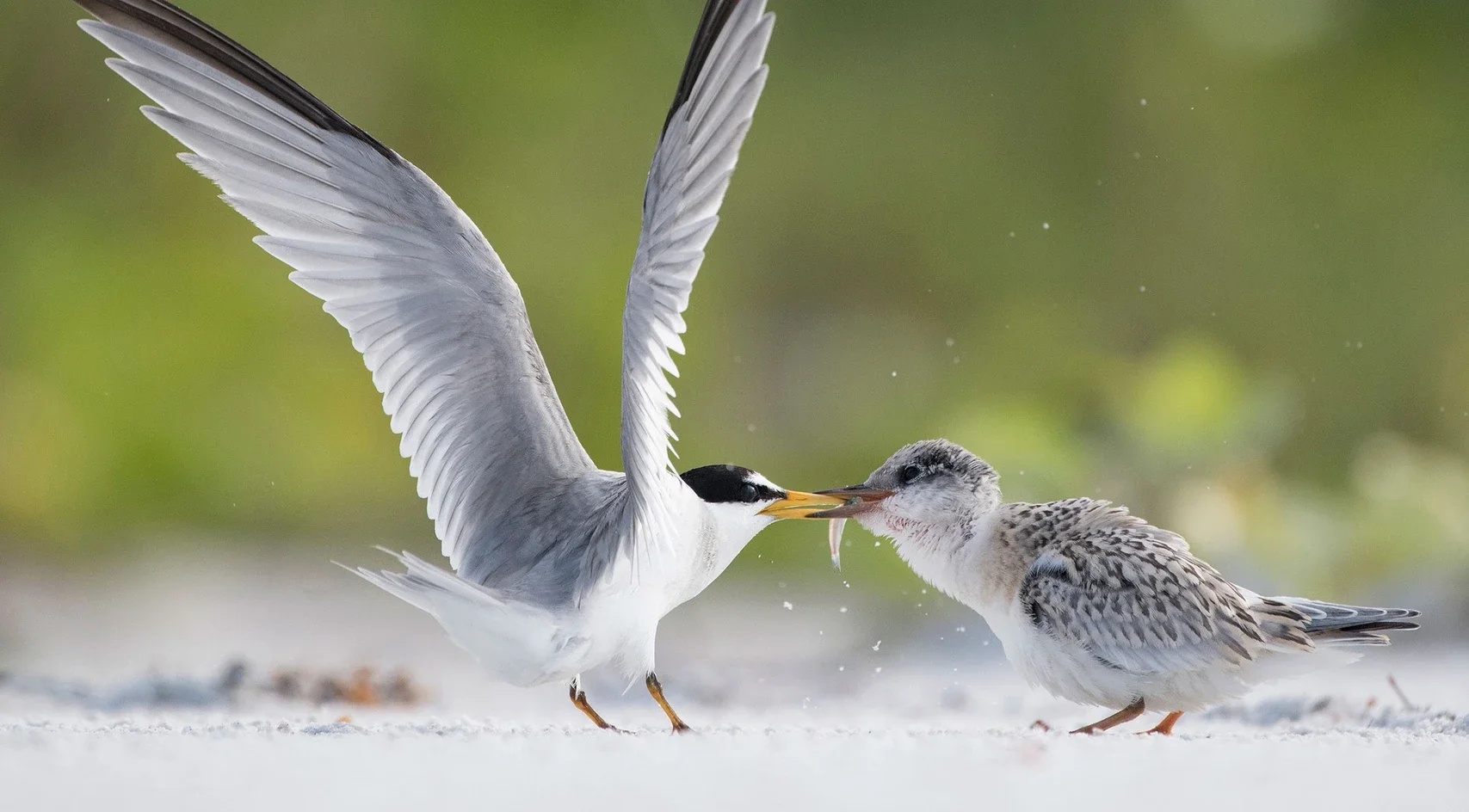
Least Tern (state endangered in Maine)
While they often share the same environments, their nesting behavior and vulnerabilities create layered ecological pressure—especially in high-traffic beach areas.
Where They Live: Maine-Specific Hotspots
These species are concentrated in southern Maine’s sandy beach systems, making them highly predictable—and highly vulnerable.
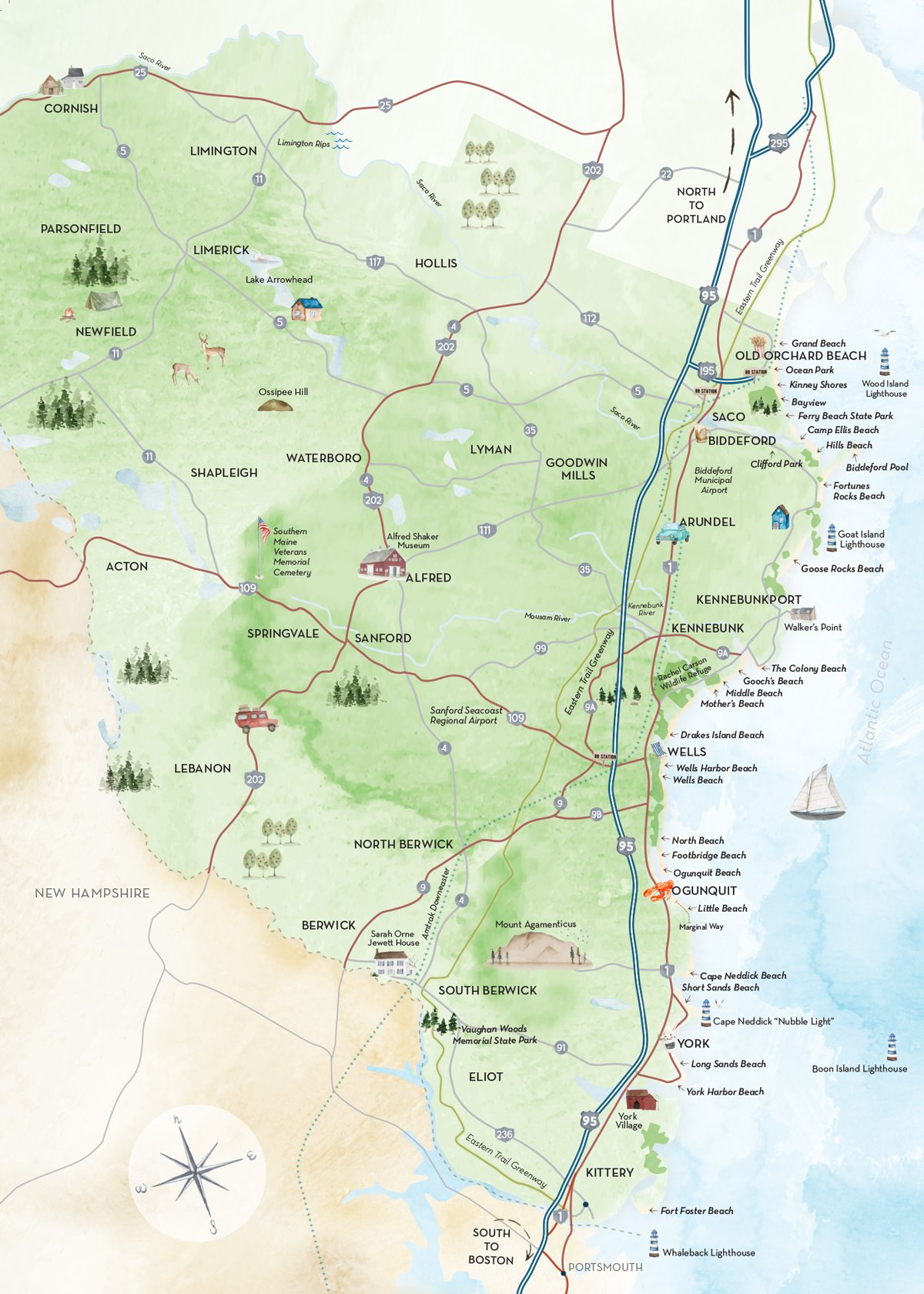
Click on the map for more information on Maine Beaches
Key Areas to Map:
Wells Beach
Ogunquit Beach
Goose Rocks Beach (Kennebunkport)
Higgins Beach (Scarborough)
Reid State Park
Rachel Carson National Wildlife Refuge
Scarborough Marsh

D1 represents the zone in which we want to focus for nesting sites
These areas support the majority of Maine’s nesting populations.
Many beaches have seasonal closures (April–August) however the actually nesting times for these species can vary by season as the climate changes.
Shared Habitat: Dunes and Open Sand Systems
Both species rely on early-successional coastal habitat, which includes:
Open sand flats
Sparse vegetation
Dune systems stabilized by:
American beachgrass (Ammophila breviligulata)
Seaside goldenrod
Wrack lines (critical feeding zones)
The Maine Audubon is a fantastic resource to understand more of our coastal habitats and how all these little pieces work together. BEGINNING WITH HABITAT.
With over 2/3 of the Piping Plover’s nesting areas being destroyed for construction and small beach home parcels (Maine Audubon, Conserving Wildlife in Maine’s Coastal Habitats), it is up to us now to protect the remaining nesting sites and recognize the impact that our lifestyle can have on these species.

Piping Plover “The master of camouflage”
Sites will note a difference in nesting styles between the two species of Piping Plovers & Least Terns. I will be honest on this one- while the Least Tern may nest in colonies, both species have been found to have minimal camouflage and have superficial nests on sand. We can see how easy it is to have our dogs run through these critical nests!
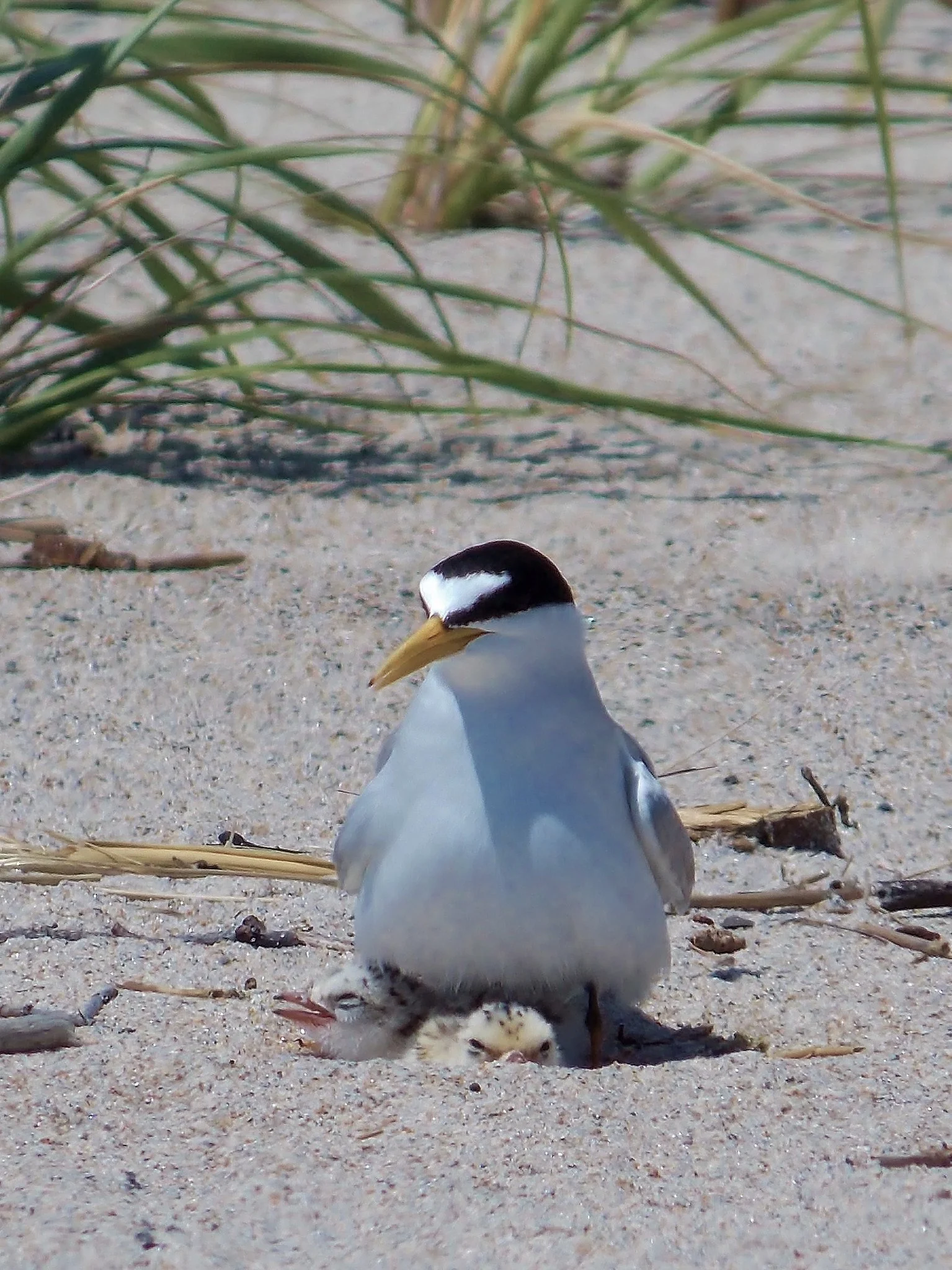
Least Tern keeping their chicks in line
Nesting Behavior and Why It’s So Easy to Miss
Piping Plovers:
Nest is a shallow scrape in the sand
Eggs blend almost perfectly with surroundings
Survival depends on invisibility
Least Terns:
Nest in groups (colonies)
More visible behavior (diving and vocalizing)
Eggs are still highly vulnerable to disturbance
In both cases, nests are extremely difficult to see until you are already too close.
Even well-trained, friendly dogs can unintentionally cause harm.
This conversation should not be about whether or not to use a tool.
It should be about whether the dog has:
Clear communication
Reliable response
A system that supports real-world environments
Because in places like Maine, where the environment is dynamic and the stakes are real, communication is what makes freedom possible.

Direct Impacts:
Crushing eggs or chicks
Running through nesting zones
Triggering defensive behavior from adult birds
Indirect Impacts:
Adults abandoning nests due to stress
Reduced feeding time for chicks
Colony-wide disturbance, especially for Least Terns
With Least Terns, one dog entering a colony can disrupt dozens of nests at once.
With Piping Plovers, even a single disturbance can result in total nest failure.
Why This Matters for Dog Owners
These birds do not recognize friendly dogs, partial recall reliability, intent versus impact.
They only recognize threat.
In fragile ecosystems like these, perception alone can determine survival outcomes. It is up to the handler to advocate not only for their dog in public spaces, but to take on the roll of a steward for species that need it- we can make a difference!
I know that this is easier said than done. In public spaces there is little that we actually have control of. With so many variables it is up to us to do the best we can, work with our dog to build effective communication and help them navigate a world that is continuing to develop around them.
Where E-Collar Communication Changes the Outcome

When properly introduced and used, an e-collar provides:
Reliable recall before a dog enters a nesting zone
Immediate interruption of chase behavior
Clear communication at a distance
The ability to maintain freedom without sacrificing environmental responsibility- Using the E Collar Technologies system gives you up to a ½ mile range of communication with your dog. That’s great range!
This is especially important in coastal environments where:
Boundaries are not visible- even with signage from local volunteers and organizations, sometimes we just stumble upon a sensitive area; when we can identify these fragile zones, we’re already one step ahead.
Wildlife is camouflaged- have your dog avoid the dunes all together
Timing is critical- anticipate your dog’s movement, understand their personality, and stay ahead of any distractions that may pull them into the dunes
Understanding the Landscape
Maine’s coastline is not just a destination—it is a functioning ecosystem made up of:
Dune systems that prevent erosion
Nesting grounds for threatened bird species
Feeding zones that support migration cycles
The Role of the Handler
Responsible off-leash freedom requires:
Situational awareness, reliable recall, and the ability to interrupt behavior immediately. You know your dog best, and you know yourself even better! Be honest with yourself and where your dog is at with their training. It’s okay to not be perfect everyday, but when we know better- we do better, and in this environment, we can have a significant impact in the state we love so much.
Freedom is not the absence of structure—it is the result of it.
Why Communication Matters
In open environments like beaches, there are no physical boundaries.
Dogs rely on: Instinct, movement, environmental stimulation.
Without clear communication, they will make decisions independently. Our role is to help our dogs navigate in these spaces as needed to ensure they are set up for success. Using an e collar is a balance, allowing your dog to make their own decisions- but having a seat belt if they are about to make a wrong one.
E-Collar as a Communication Tool
The e-collar is often misunderstood because of how it has been used, not because of what it is capable of.
At its core, an e-collar is not a shortcut, and it is not a replacement for training. It is a communication tool that extends your reach, allowing you to maintain a clear line of communication with your dog in environments where voice, body language, and leash pressure are no longer effective.
What It Is
When properly introduced, the e-collar functions as:
A low-level tactile signal your dog has been conditioned to understand
A way to reinforce behaviors your dog already knows
A consistent form of communication that does not rely on proximity
The goal is not compliance through force.
The goal is clarity through consistency.What It Is Not
An e-collar is not:
A tool for teaching new behaviors
A punishment for disobedience
A replacement for foundational leash work
A solution for untrained or unprepared dogs
Without proper conditioning, the tool has no meaning—and misuse can create confusion rather than communication.Seasonal Awareness
The Standard
Before off-leash access in sensitive environments, dogs should be able to:
Recall immediately from distance
Recall off wildlife
Remain neutral to people and dogs
Maintain proximity without constant correction
Final Note
Your dog’s freedom is directly tied to your ability to communicate.
The more clearly you communicate, the more access you create—not just for your dog, but for everyone who shares these spaces.
Off-leash freedom is a privilege not a right.