

“You Have the Best Job in the World.”
“You Have the Best Job in the World.”
I hear this all the time.
And in many ways, I do.
I get to spend my days outside, build relationships with incredible dogs, watch them learn, explore, gain confidence and experience the world in ways that are deeply rewarding to be part of. There are days when I'm standing somewhere beautiful, surrounded by dogs, and genuinely cannot believe this is what I get to do for work.
But I also think the dog industry could use a little de-influencing.
Not because this work is uniquely difficult compared with every other profession, and certainly not because the rewarding parts aren't real. They are. But if you're considering making dogs your profession, I think it's important to understand the less visible side of what you're signing up for.
Loving dogs is not enough. Being good with dogs is not enough. A certification isn't enough. Thousands of hours of experience aren't enough. The newest equipment, the best vehicle, the safest kennels, the most expensive GPS collar, a perfectly conditioned e-collar, a first-aid kit, emergency procedures and meticulously written protocols are not enough to guarantee that nothing will ever go wrong.
You should have those things. You should pursue the education. You should build the systems. You should buy good equipment and maintain it. You should continue learning long after you feel competent. Like most professions, you will be in a constant state of learning, growing and refining how you operate.
But none of those things changes the fundamental nature of what you're working with, you're working with animals.
And dogs, at the end of the day, will still be dogs.
We know an incredible amount about dogs, but we don't know everything
Humans have spent generations trying to understand dogs. Thousands of books have been written about dog training, behavior, cognition, psychology, genetics, working dogs and the relationship between humans and dogs. Entire professions and academic disciplines exist around understanding how dogs learn and why they behave the way they do. There are countless training philosophies and strongly held opinions about what dogs need and how humans should communicate with them.
After all of that research, there is still something none of us can do: we cannot climb inside a dog's head.
We can study behavior and body language. We can understand genetics and breed tendencies. We can condition responses, build reinforcement histories and practice behaviors thousands of times. We can know an individual dog so intimately that we recognize a nearly imperceptible change in posture before anyone else notices it.
That knowledge matters tremendously. It helps us predict behavior, make better decisions and communicate more effectively with the animal standing in front of us.
But prediction is not certainty.
That distinction matters for every dog owner. If you're going to make dogs your profession, I think it's foundational.
Don't love dogs so much that you forget they're dogs
This is where the conversation gets a little uncomfortable, because anthropomorphism is tricky.
I'm not saying your dog can't be your child. I'm certainly not saying I don't consider my own dogs my children. They are deeply woven into our family, our routines, our decisions and the way we have built our lives.
But I don't treat my dogs as though they are human children, because they aren't human children. They are dogs.
I think one of the greatest forms of respect we can give an animal is allowing it to remain an animal in our understanding of it.
That means recognizing breed, genetics, disposition, drive, instinct, physical structure, developmental history, learned behavior, environmental influences and individual personality. It means looking at the entire animal rather than interpreting everything they do through a human emotional framework.
A Rhodesian Ridgeback isn't simply a furry person who happens to live in my house. There are generations of genetic selection behind that animal. The same is true of a Border Collie, Labrador Retriever, livestock guardian dog, terrier, hound or any other breed or mix.
Genetics don't write every line of the story, but pretending they aren't part of the book doesn't make them disappear.
When we ignore those things because they don't fit the picture we've created of our dog, eventually reality has a way of showing itself. That might be prey drive, guarding behavior, herding, chasing, independence, sensitivity, sociability, environmental awareness or any number of other traits.
That doesn't make the dog bad. Often, it makes the dog exactly what it is.
And professionally, you don't have the luxury of forgetting that.
You're going to work with dogs whose owners have incredibly strong emotional relationships with them. You may love those dogs deeply yourself. But part of your responsibility is remaining capable of looking at the animal objectively enough to make decisions based on what that dog actually is, not simply who we want them to be.
Risk doesn't begin when the leash comes off
At Timberline, we've used the phrase “Your dog's world is as big as you make it” for years.
It's not just a marketing line. It's a philosophy Jesse and I would live by whether Timberline existed or not.
We believe dogs deserve opportunities to move their bodies, use their noses, explore terrain, swim, run, hike, climb, work and interact with environments that ask something of them. We believe there is enormous value in giving dogs appropriate outlets for the animals they actually are.
For one dog, making their world bigger might mean learning to comfortably walk through their neighborhood. For another, it might mean hiking mountains, hunting, bikejoring, skijoring, trail running, swimming or camping. For another dog, because of temperament, behavior, health, age or circumstance, their biggest appropriate world may genuinely be their backyard and a few carefully selected places.
There is nothing lesser about that.
But regardless of how big or small we make that world, we have to accept risk. Risk doesn't suddenly appear when a leash comes off.
Every time we put a dog in a vehicle, there is risk. Every time we bring them onto a plane, train or bus, walk them through a city, cross a road with them, introduce them to another dog, bring them into the woods or simply open the front door, there is risk.
Even attaching a leash to a collar or harness doesn't eliminate it. Equipment can fail. Humans can make mistakes. Environments can change. Other people and animals can behave unpredictably. Things entirely outside of our control can happen.
That's not an argument for carelessness. It's the opposite.
Recognizing risk is what allows us to make thoughtful decisions about it. We don't get to choose between risk and no risk. We choose which risks we're willing to navigate and what we can reasonably do to mitigate them.
The best equipment in the world is still equipment
Technology has given us incredible tools.
GPS tracking collars can help locate dogs. E-collars can allow communication across substantial distances when appropriately trained and used. We have rescue harnesses, crash-tested vehicle equipment, sophisticated kennels, first-aid supplies, reflective gear and access to veterinary medicine that previous generations of dog owners couldn't have imagined. Use them.
Invest in good equipment. Learn how it works. Maintain it. Inspect it. Replace it when it needs replacing.
But don't confuse owning the tool with eliminating the risk.
You can have a brand-new vehicle outfitted with the best kennels you can buy. You can have your GPS devices fully charged. You can have your e-collar remote exactly where it belongs. You can have backups for your backups.
Equipment still fails.
Batteries die. Electronics malfunction. Collars can come off. Clips break. Vehicles crash. GPS service disappears. A rescue harness can help you carry an injured dog out of the woods, but it can't prevent the injury that made you need it.
Training changes probability. It doesn't create certainty.
The same principle applies to training.
You can have thousands upon thousands of hours of professional experience. You can attend seminars, complete mentorships, earn certifications, study learning theory and spend years becoming an extraordinarily skilled handler.
The dog is still a dog.
There is no training methodology that produces an animal incapable of making an unexpected decision. There is no magical number of repetitions after which behavior becomes permanently guaranteed across every possible environment, physiological state and circumstance for the remainder of an animal's life.
Training changes probability. Good handling changes probability. Thoughtful management changes probability. Appropriate equipment changes probability. Experience, preparation and environmental awareness change probability.
That's precisely why we invest in them. But probability and certainty are fundamentally different things.
This is why I've become increasingly uncomfortable with statements like, My dog would never.
I've said it. Most dog owners probably have.
Maybe your dog has encountered deer a hundred times without chasing one. Maybe you've recalled them away from wildlife, dogs, people and distractions more times than you can count. Maybe they've behaved reliably in a particular environment for ten years.
That history matters tremendously.
But “has never” and “could never” are not the same statement.
The Ridgebacks sleeping in my house are extraordinarily predictable to me. I know their expressions, rhythms, habits and quirks. I know what gets their attention in the woods. I can often tell from a nearly imperceptible change in body language that something has caught their attention before I know what it is.
And still, my dog could.
That doesn't mean I don't trust my dogs. It means I respect the fact that they're dogs.
There is an enormous difference between predictable and predetermined.
This is where the responsibility of professional animal care gets real
When someone hands you their dog, they are handing you something they may consider their child, best friend, hiking partner or one of the most important relationships in their life.
And then you drive away. For however long that dog is with you, you're making decisions on their behalf.
That's the part of this industry I think deserves more conversation.
There are the obvious responsibilities: reading behavior, monitoring physical condition, evaluating weather, managing interactions, maintaining equipment, choosing terrain, transporting animals safely and knowing how to respond when something changes.
Most of those decisions are completely invisible.
When they're made well, there often isn't much to see.
But there is another reality that comes with professionally caring for animals: you can be operating with the best intentions, good judgment, years of education, high-quality equipment and well-developed safety procedures, and something can still happen.
A dog can become sick. A dog can get injured. A dog can behave differently than expected. A piece of equipment can fail. Weather can change. A client can misunderstand their own dog's capabilities.
You can encounter a situation that isn't covered perfectly by the protocol because nobody knew that particular situation needed a protocol yet.
That's not an excuse for failing to prepare.
It's exactly why preparation matters.
Safety procedures aren't guarantees
Have the emergency plan.
Carry the first-aid kit. Learn canine first aid. Know where the emergency veterinarians are. Understand heat illness and cold exposure. Have procedures for missing dogs, vehicle accidents, injuries, dog fights and equipment failures. Train staff. Practice communication. Document incidents. Review what worked and what didn't. Change systems when experience teaches you something.
Have redundancies where the consequences justify them.
But don't build those systems because you believe they'll make bad outcomes impossible. Build them because you understand bad outcomes are possible. That's an important distinction.
One mindset treats safety procedures as a guarantee. The other treats them as preparation.
If you're responsible for other people's animals professionally, you need the second.
You are going to be humbled
I think this may be one of the most important things for someone entering this industry to understand.
Working with animals will humble you.
You can know the terrain. You can know the breed. You can know the individual dog. You can have years of successful experiences behind you. You can have the equipment, training, protocols and experience.
And something can still happen that you didn't anticipate.
There will be situations where your procedures work beautifully. There may also be situations that expose a hole you didn't know existed until something found it.
You'll make judgment calls that work exactly as intended, and you'll make decisions that you later dissect with information you didn't have when you made them.
The goal isn't to become so experienced that you're beyond being surprised. I don't think that person exists.
The goal is to become experienced enough to understand that you're never beyond learning.
We have to commit to the whole life
This conversation begins before someone ever becomes a dog professional. It begins before the dog even comes home. Before buying the puppy or signing the rescue paperwork, we're agreeing to the entire animal and the entire lifecycle.
That means learning what the breed or individual dog may need rather than only thinking about what we want from them. It means accepting that the animal standing in front of us may be different from the one we imagined.
It means understanding that their needs will change. Their abilities will change. They will age.
And eventually, one way or another, we will lose them.
Heartbreak is inevitable when we choose to love something whose life is shorter than ours. I don't think acknowledging that should make us love dogs more cautiously.
I think it should make us more intentional about the life in between.
Dogs will be dogs
Maybe that's the simplest lesson underneath all of this.
You can have the nicest vehicle, the safest kennels, the newest equipment, the best GPS technology, a perfectly conditioned e-collar, thousands of hours of training, written protocols, emergency plans, continuing education and years of experience.
Have those things. Take them seriously. Never stop improving them. But remember what is standing on the other end of all that preparation.
A dog.
A living, autonomous animal with genetics, instincts, sensory experiences, motivations and decision-making capabilities of its own.
Dogs will be dogs.
I don't mean that as an excuse for poor handling, inadequate training, bad systems or irresponsible decisions. Quite the opposite. The fact that dogs will be dogs is exactly why all of those things matter so much.
It's why we train. It's why we prepare. It's why we build protocols, carry equipment, study behavior and continue learning. It's why we make judgment calls and revisit them when new information teaches us something.
But none of that removes the animal from the equation.
Perhaps the most important thing I've learned from owning dogs, working with dogs and building a life around them is that respecting an animal means accepting both sides of that relationship: our responsibility to do everything reasonably within our power to protect them, and the humility to recognize the limits of that power.
There is risk in making their world bigger. There is risk in keeping it small. There is risk in putting them in the car, walking them across the street, clipping on the leash and bringing them into our homes.
There is risk in loving something whose life we cannot completely control.
So prepare for it. Respect it. Never become complacent about it. Keep learning from it, and give the dog standing in front of you the biggest life you responsibly can.
Because after all the books, training philosophies, technology, equipment, procedures and experience, one truth remains remarkably simple:
Dogs will be dogs.
And our responsibility isn't to pretend otherwise.
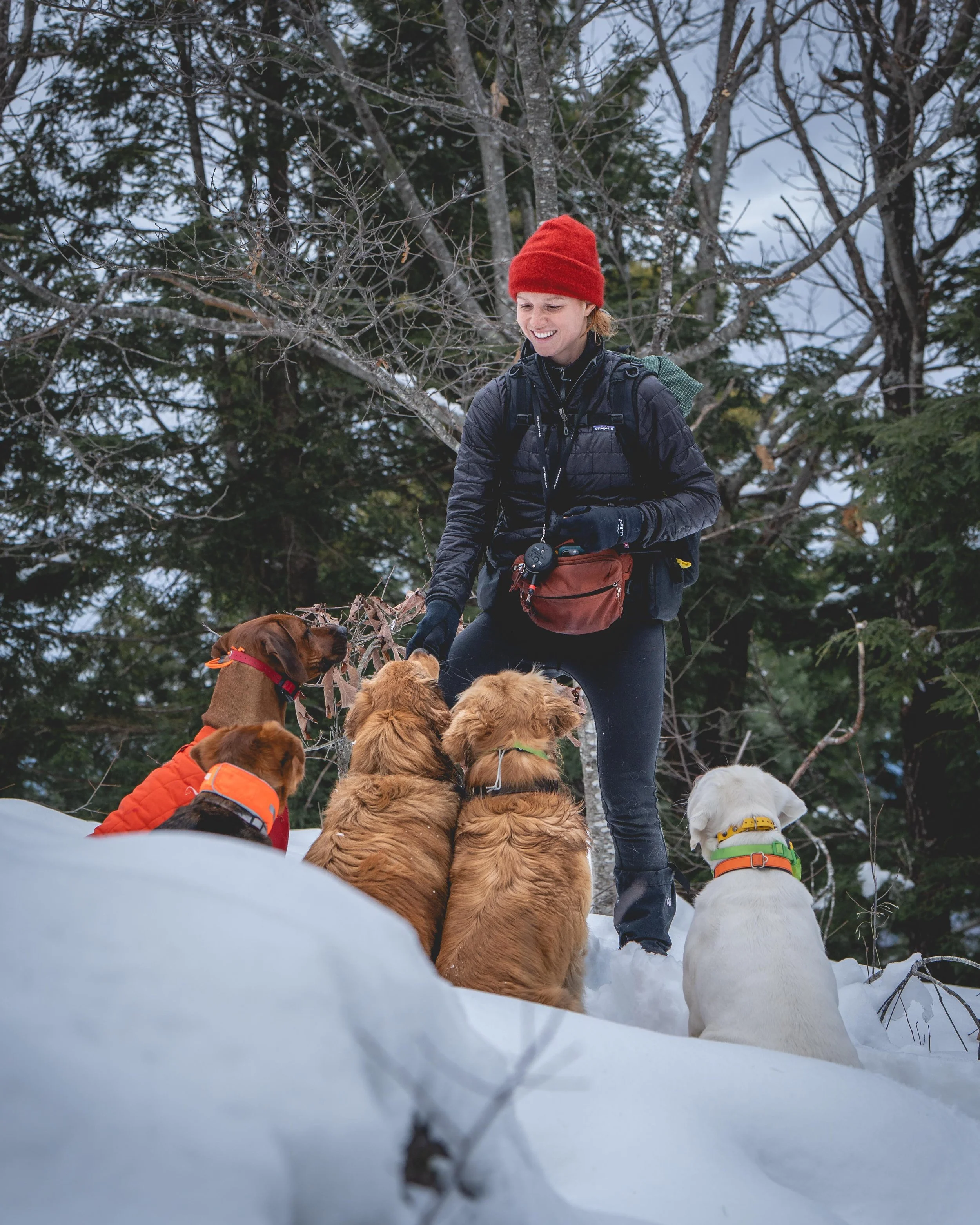
E-Collar Use in Pack Dynamics
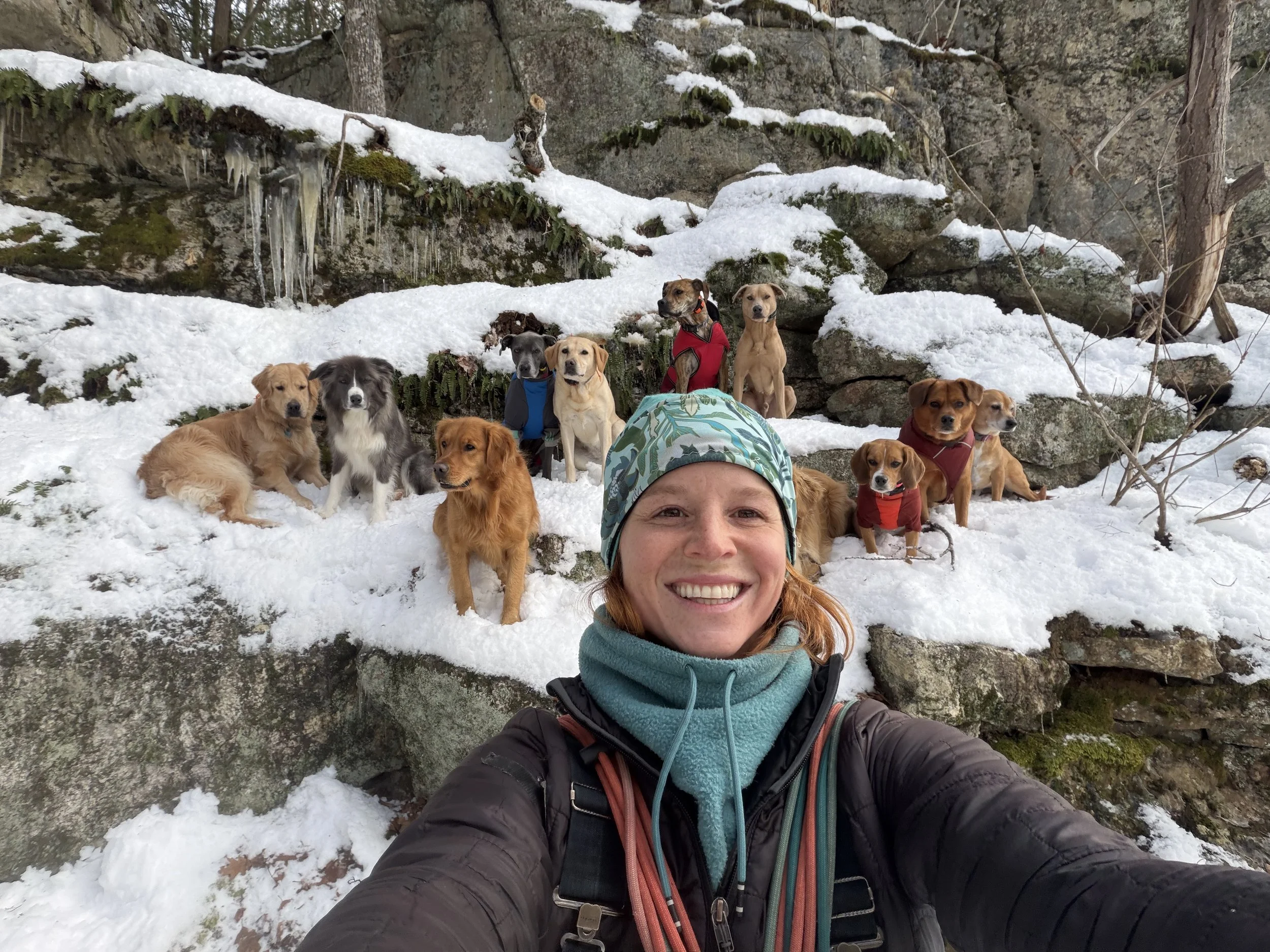
Communication, Responsibility, and Real-World Application in Off-Leash Environments
At Timberline Treks, e-collars are not a shortcut, a fix, or a replacement for training.
They are a layer of communication, used thoughtfully, intentionally, and only after a dog understands what is being asked of them.
This approach is not unique to us. It aligns with principles emphasized by trainers such as Tom Davis, Robert Cabral, and Cheri Lucas—all of whom prioritize clarity, timing, and relationship over force or reliance on tools.
The Foundation: Dogs Learn Through Consequences and Clarity
All dog training—regardless of style—operates within the framework of operant conditioning:
All dog training operates within the framework of learning through consequence and timing. A dog must clearly understand what behavior is being asked, how to succeed, and how to turn pressure off. Without that understanding, no tool, regardless of how advanced, will produce reliable results.
Training is not about controlling behavior in the moment. It is about building a system where the dog consistently makes the right decision because the communication is clear. Training is not about control.
It is about teaching the dog how to make the right decisions.
What an E-Collar Actually Is (and Isn’t)
An e-collar is a remote communication tool that allows a handler to reinforce known behaviors at a distance. Its effectiveness depends entirely on how it is introduced and applied. The tool itself is neutral, it can create clarity when used correctly or confusion when used poorly.
At Timberline, we treat the e-collar as an extension of communication, not a replacement for it. The dog must already understand leash pressure, recall, and basic guidance before the e-collar is ever layered in. Communication Over Control
Across the training industry, there is growing alignment around the idea that tools should support, not replace relationship and understanding. Trainers like Tom Davis and Robert Cabral consistently emphasize that recall must be taught first, and that engagement is more important than compliance.
Cheri Lucas further reinforces the importance of relationship and leadership, focusing on how dogs respond to clear, consistent guidance rather than force. These perspectives mirror how we approach both individual dogs and pack management at Timberline. Pack Dynamics Change Everything.
Training one dog in a controlled setting is fundamentally different from managing a group of dogs in real-world environments. In a pack setting, we are balancing multiple personalities, energy levels, and responses to environmental stimuli, all while maintaining cohesion and safety.
This requires communication that is both immediate and consistent across the entire group. The handler must be able to guide movement, interrupt unsafe decisions, and maintain structure without escalating tension. This is where tools like the e-collar can play a role, not as a primary method of control, but as a support system within a much larger framework.
The Role of the E-Collar in a Pack
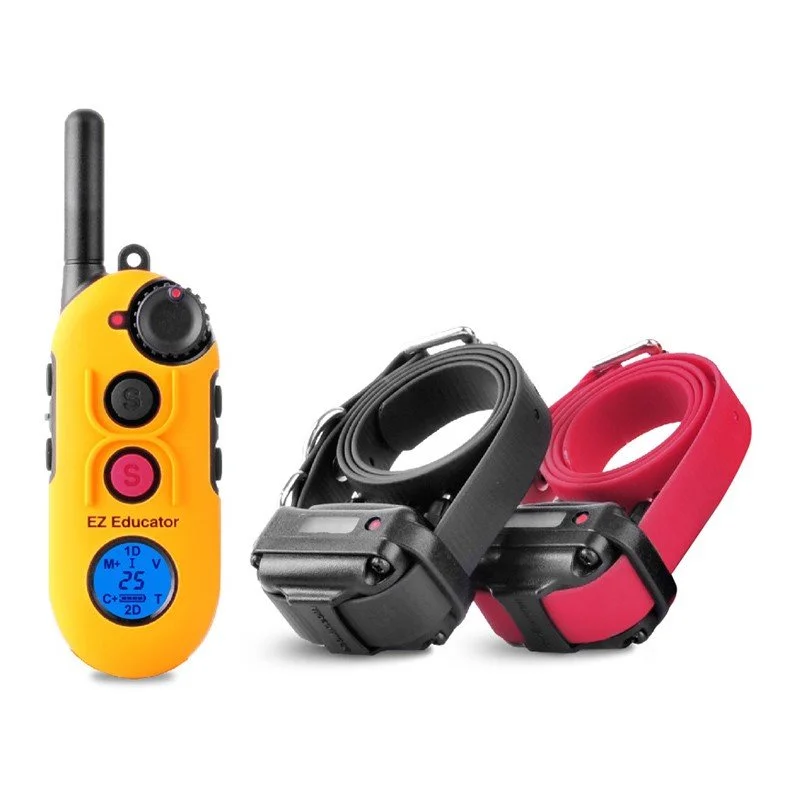
In a properly trained pack, the e-collar is rarely the primary form of communication.
In a well-structured pack, the e-collar is not the primary form of communication. Our goal is always to lead with voice, presence, and body language. Ideally, a single verbal cue or whistle carries enough weight to influence the entire group.
The e-collar exists in the background, reinforcing known behaviors and providing a layer of accountability when distance or distraction creates a gap in communication. When the foundation is strong, the tool becomes subtle, almost invisible in practice.
Most of the time, it is not used at all.
But in moments like:
A dog breaking toward wildlife
A sudden environmental hazard
A split-second safety decision
The ability to communicate clearly and instantly can prevent:
Injury
Lost dogs
Escalation
This is where the tool becomes what we refer to as a “seatbelt”, not always active, but critical when needed.
Timing, Consistency, and Fairness
The effectiveness of any training tool comes down to timing and consistency. A dog must be able to associate the communication with its behavior in real time. When timing is unclear or inconsistent, confusion follows, and reliability breaks down.
This is why we emphasize training before tool use. Without a clear foundation, even the best tools will fail to produce meaningful results.
When used correctly, the e-collar is subtle.
You will see:
Low-level input
Minimal repetition
Quick, confident responses
Dogs remaining engaged and stable
The dog understands:
What is being asked
How to respond
How to succeed
What Unethical or Ineffective Use Looks Like
Misuse often shows up as inconsistency or over-reliance. This can include repeated high-level corrections, delayed responses, or visible signs of stress such as avoidance or shutdown. In these cases, the issue is not the dog’s willingness to comply, but a gap in communication or understanding.
When the tool is doing most of the work, it is usually an indication that the foundation has not been properly established. If we reflect and see this in our dog, it is on us to go back to the basics and work on our foundational understanding before continuing forward with the e-collar.
E-collar use cannot be separated from leadership. In a modern training context, leadership is not about dominance or force. It is about providing clear guidance, maintaining consistency, and making decisions that prioritize safety and stability.
Dogs rely on that structure. They look to the handler for direction, especially in complex or high-stimulation environments.
Advocacy plays an equally important role. This means managing space, preventing unsafe interactions, and ensuring that each dog is set up to succeed, both individually and within the pack.
The Goal: A Dog That Chooses the Handler
The goal is not to control every movement. It is to build a dog that remains connected, engaged, and responsive, even with freedom.
A well-trained dog does not rely on constant correction. Instead, it operates within a clear system, responding to voice and presence first, with tools acting as a secondary layer when needed.
Final Perspective
Off-leash freedom requires structure, preparation, and responsibility. The e-collar, when used correctly, can support that system. When used incorrectly, it can undermine it.
At Timberline Treks, our responsibility is to ensure that dogs understand the communication, that tools are used ethically, and that safety is never compromised. This is not a linear path, our dogs are not robots, nor are we. Every day is a day of training with our companions, and some days our plate may feel too full- that’s natural, just know that it is on us to do our best. At the end of the day, our dog’s world is as big as we make it, and it is always on us.
The tool does not create the result.
The training does.
Continuing Education
At Timberline Treks, we believe that good dog training is not static, it evolves through continued education, hands-on experience, and exposure to different perspectives within the industry.
Our approach to pack dynamics, off-leash reliability, and e-collar communication is shaped not only by real-world application, but also by learning from respected trainers who emphasize clarity, accountability, and relationship-based training.
Below are a few professionals and resources we recommend for those looking to deepen their understanding.
Tom Davis — Real-World Behavior & E-Collar Application
Tom Davis, founder of Upstate Canine Academy, focuses heavily on practical, real-world training scenarios—particularly behavior modification and off-leash reliability.
His work emphasizes:
Clear communication before correction
Accountability paired with freedom
E-collar use as reinforcement, not punishment
His No Bad Dogs Podcast and YouTube channel provide transparent, unedited training sessions that highlight both successes and challenges in real time.
These are especially valuable for understanding how training translates outside of controlled environments and into real-life situations.
Robert Cabral — Foundation, Recall, and Clarity
Robert Cabral’s training philosophy centers around building strong foundational behaviors, especially recall, engagement, and handler awareness.
He consistently emphasizes that:
Dogs must understand commands before tools are introduced
Recall is one of the most critical safety behaviors a dog can have
Consistency and timing are what create reliability
His content is particularly helpful for understanding how to build a dog that remains connected to the handler, even at distance.
Cheri Lucas — Relationship, Psychology, and Leadership
Cheri Lucas brings a strong focus on canine psychology, relationship-building, and leadership.
Her work reinforces the idea that:
Dogs respond best to clear, consistent guidance
Leadership is built through trust and predictability, not force
Behavior is deeply tied to emotional state and environment
This perspective is critical when working within pack dynamics, where multiple dogs must coexist and respond within a shared structure.
Why We Encourage Ongoing Learning
No single trainer has all the answers.
The most effective approach comes from:
Understanding foundational learning theory
Observing different methodologies
Applying what works responsibly in real-world environments
The common thread across the trainers we respect is this:
Clear communication, fair expectations, and accountability create reliable dogs.
Not Sure Where Your Dog Stands?
Every dog is different.
If you are unsure whether your dog is ready for off-leash work or how tools should be introduced, we can help guide you through that process and build a plan that supports both you and your dog.
Local Resources are closer than you think, reach out to A Very Good K9 for board & train options.
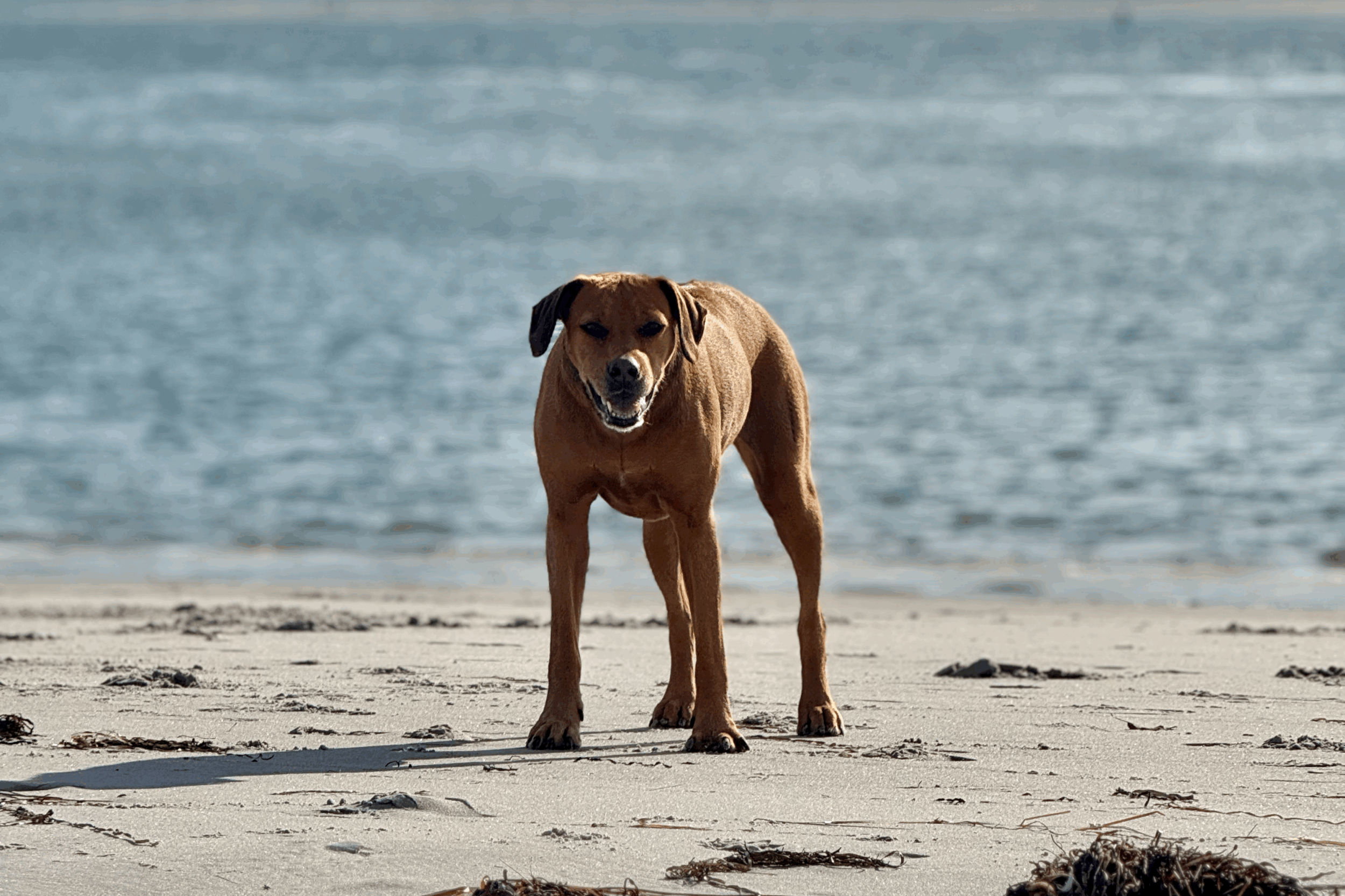
E-Collars Can Protect Maine’s Fragile Eco-Systems
E-Collars Can Protect Maine’s Fragile Eco Systems
Maine’s beaches aren’t just beautiful, they’re active, living ecosystems.
There’s growing tension around access to Maine’s beaches with our dogs, and both sides of the debate make valid points: Maine is a living, changing ecosystem that deserves protection, yet off-leash freedom with our canine companions feels essential to how many of us experience these landscapes. Rather than choosing sides, we should seek balance — embracing responsible tools and practices that allow us to enjoy the coast without harming it.
I encourage dog owners to explore the use of E-collars as one reliable method to strengthen communication and control, reducing conflicts with wildlife and other beach users while preserving the joy of off-leash exploration. If we recognize the power we have as individuals to protect fragile ecosystems and commit to clear, consistent stewardship and training, we can maintain access to Maine’s wild places for people and dogs alike.
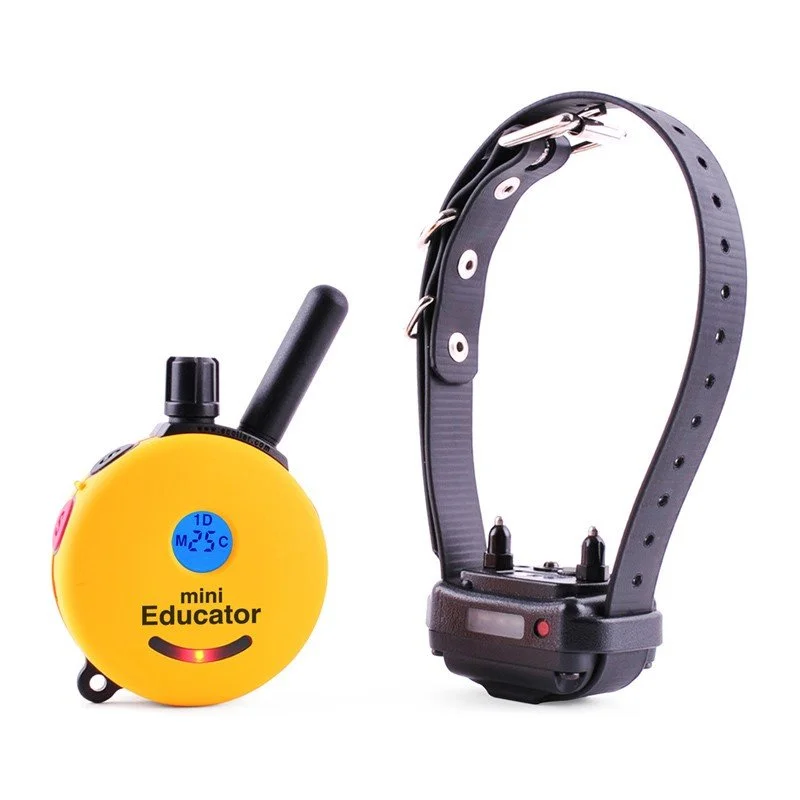
Using a granular system such as the Mini Educator is just one series of this tool that reinforces your line of communication with your dog while they’re off leash on Maine’s Beaches.
Two of the most sensitive and protected species you’ll encounter along our coast are:
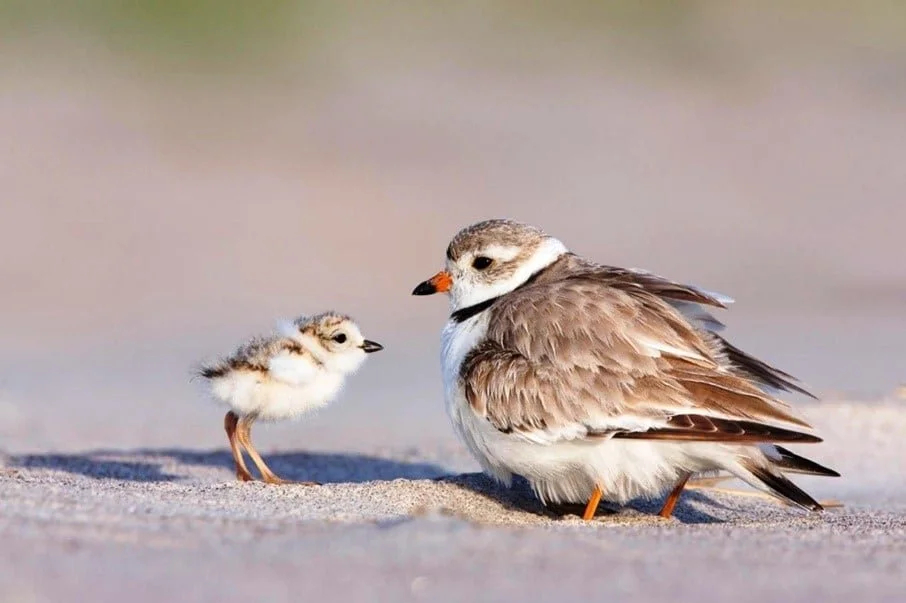
Piping Plover (state & federally threatened)
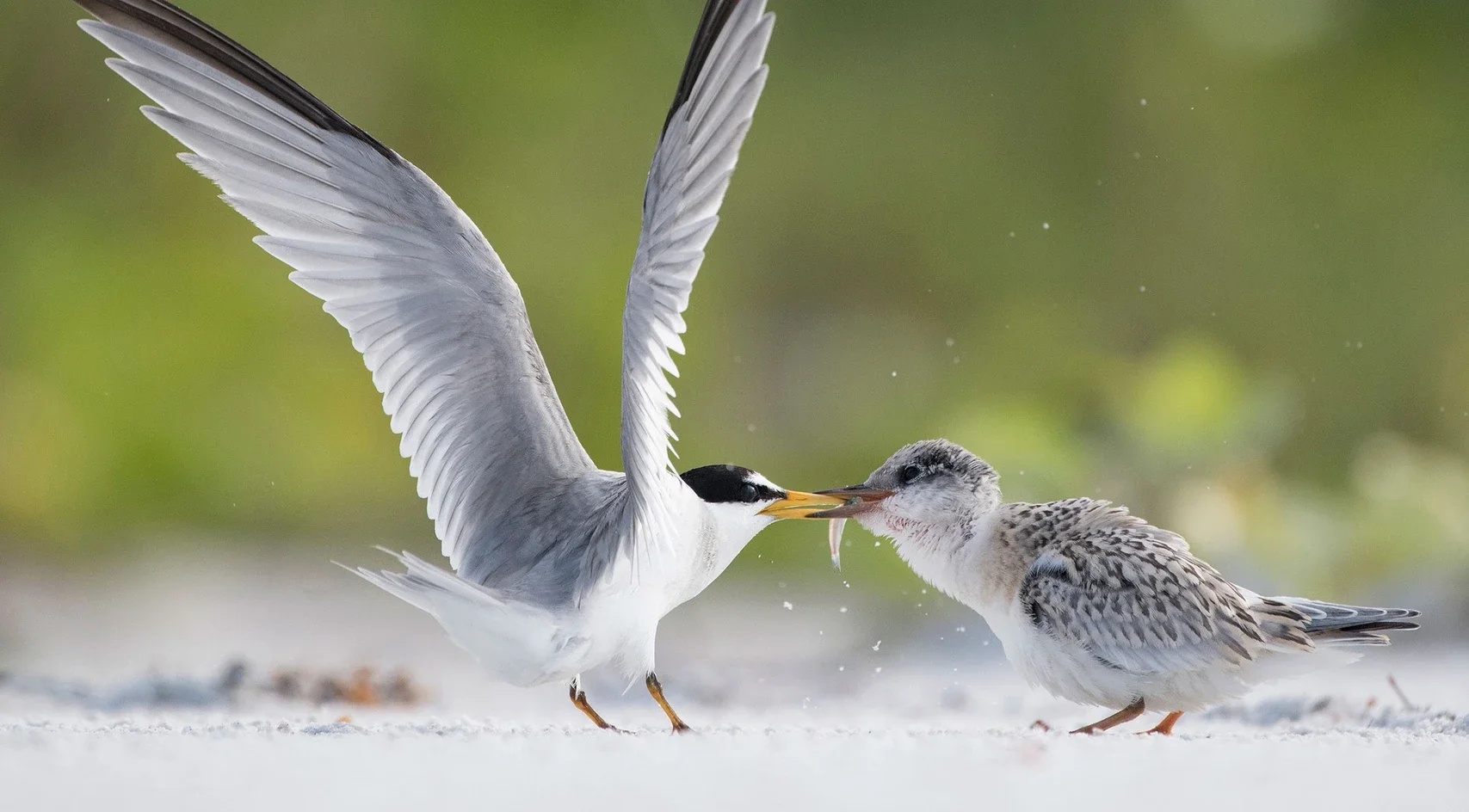
Least Tern (state endangered in Maine)
While they often share the same environments, their nesting behavior and vulnerabilities create layered ecological pressure—especially in high-traffic beach areas.
Where They Live: Maine-Specific Hotspots
These species are concentrated in southern Maine’s sandy beach systems, making them highly predictable—and highly vulnerable.
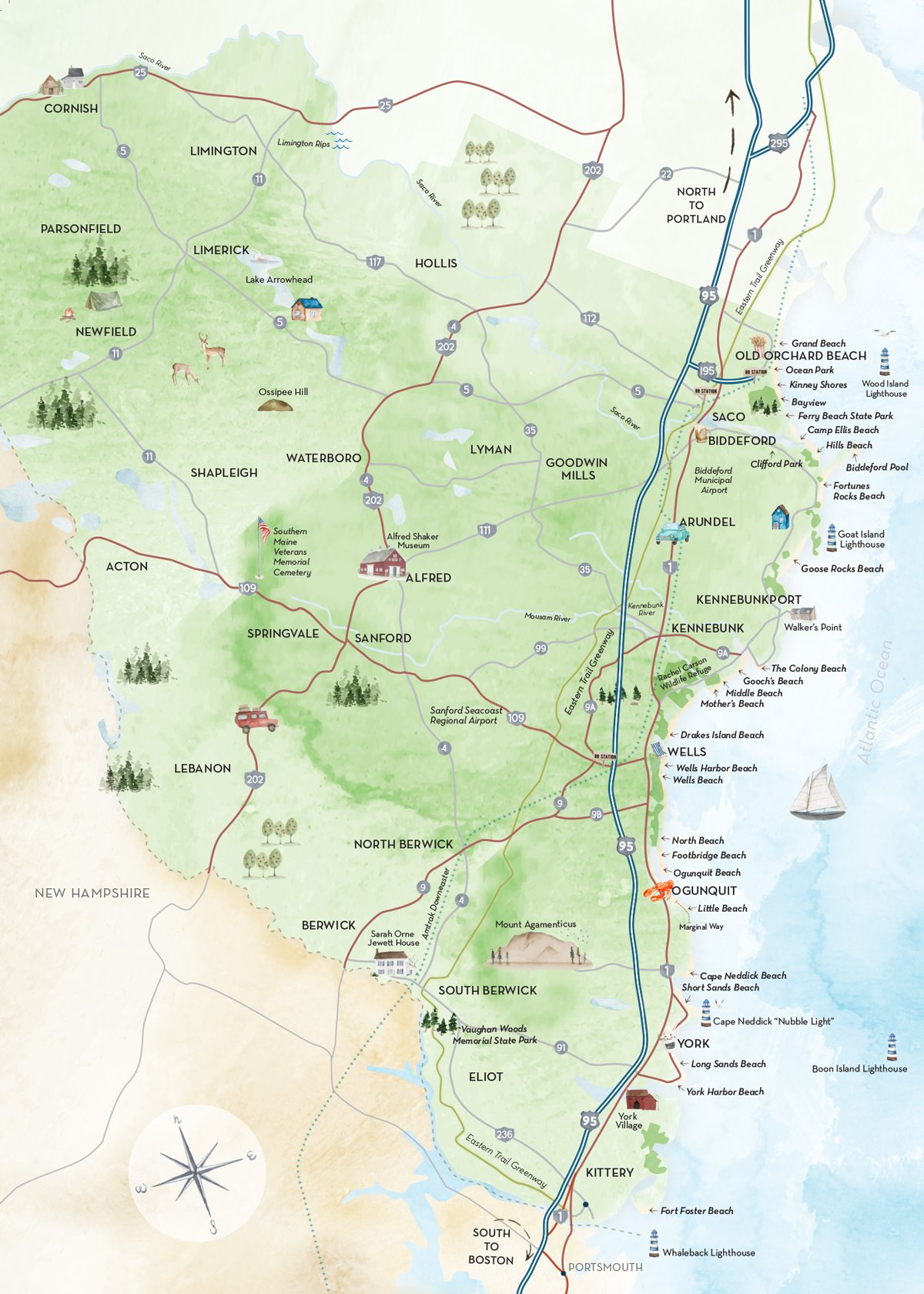
Click on the map for more information on Maine Beaches
Key Areas to Map:
Wells Beach
Ogunquit Beach
Goose Rocks Beach (Kennebunkport)
Higgins Beach (Scarborough)
Reid State Park
Rachel Carson National Wildlife Refuge
Scarborough Marsh

D1 represents the zone in which we want to focus for nesting sites
These areas support the majority of Maine’s nesting populations.
Many beaches have seasonal closures (April–August) however the actually nesting times for these species can vary by season as the climate changes.
Shared Habitat: Dunes and Open Sand Systems
Both species rely on early-successional coastal habitat, which includes:
Open sand flats
Sparse vegetation
Dune systems stabilized by:
American beachgrass (Ammophila breviligulata)
Seaside goldenrod
Wrack lines (critical feeding zones)
The Maine Audubon is a fantastic resource to understand more of our coastal habitats and how all these little pieces work together. BEGINNING WITH HABITAT.
With over 2/3 of the Piping Plover’s nesting areas being destroyed for construction and small beach home parcels (Maine Audubon, Conserving Wildlife in Maine’s Coastal Habitats), it is up to us now to protect the remaining nesting sites and recognize the impact that our lifestyle can have on these species.
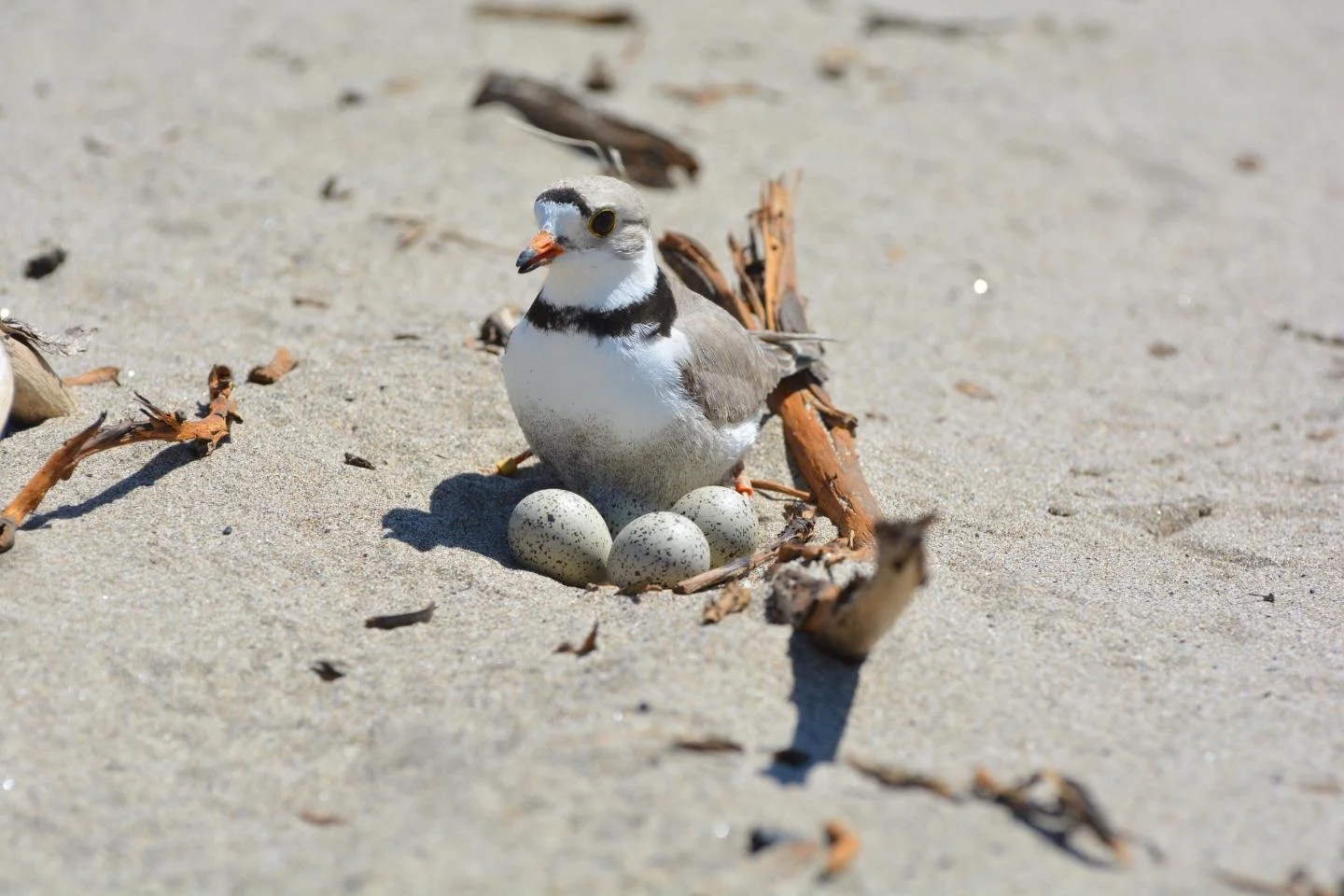
Piping Plover “The master of camouflage”
Sites will note a difference in nesting styles between the two species of Piping Plovers & Least Terns. I will be honest on this one- while the Least Tern may nest in colonies, both species have been found to have minimal camouflage and have superficial nests on sand. We can see how easy it is to have our dogs run through these critical nests!

Least Tern keeping their chicks in line
Nesting Behavior and Why It’s So Easy to Miss
Piping Plovers:
Nest is a shallow scrape in the sand
Eggs blend almost perfectly with surroundings
Survival depends on invisibility
Least Terns:
Nest in groups (colonies)
More visible behavior (diving and vocalizing)
Eggs are still highly vulnerable to disturbance
In both cases, nests are extremely difficult to see until you are already too close.
Even well-trained, friendly dogs can unintentionally cause harm.
This conversation should not be about whether or not to use a tool.
It should be about whether the dog has:
Clear communication
Reliable response
A system that supports real-world environments
Because in places like Maine, where the environment is dynamic and the stakes are real, communication is what makes freedom possible.
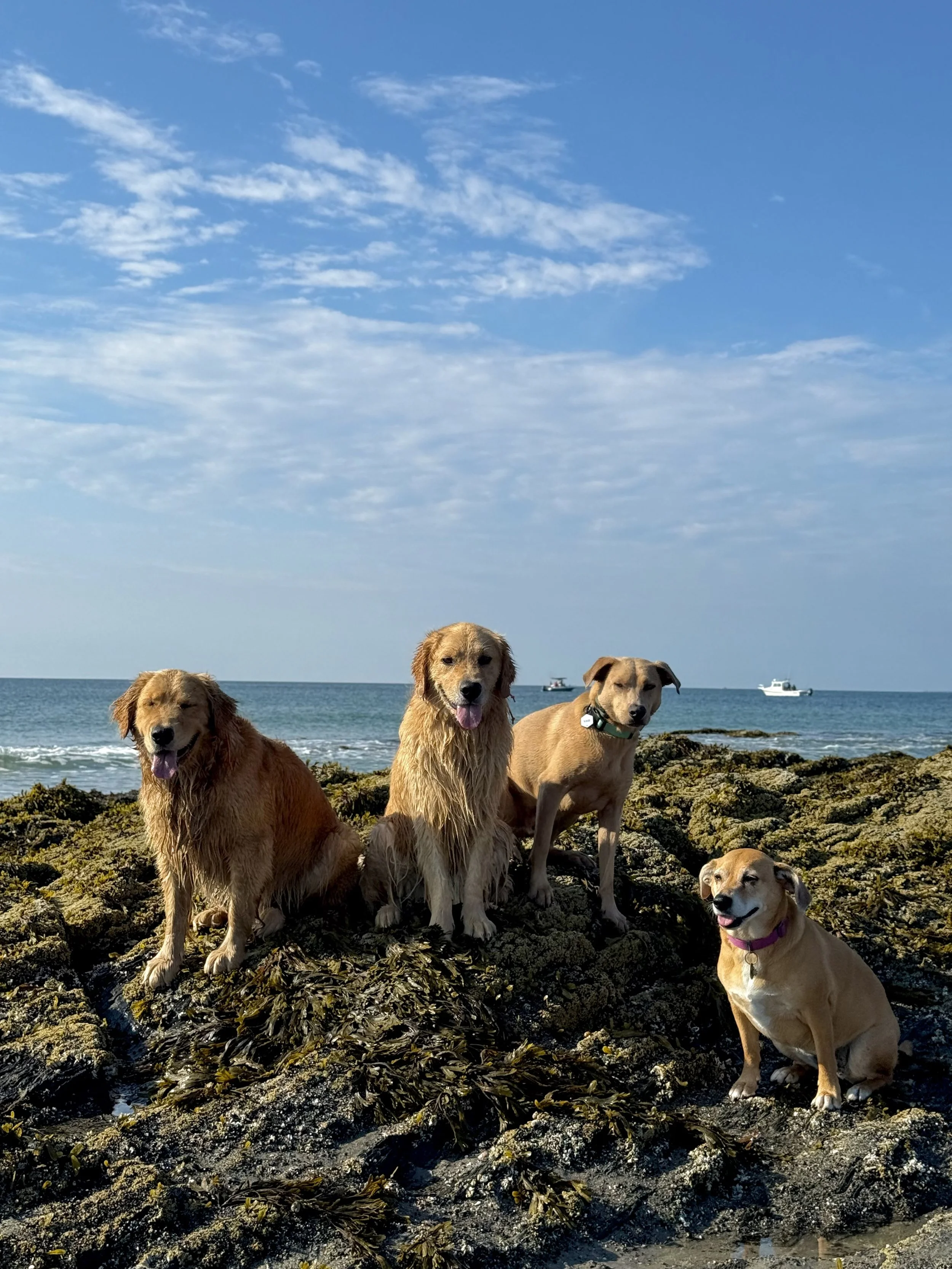
Direct Impacts:
Crushing eggs or chicks
Running through nesting zones
Triggering defensive behavior from adult birds
Indirect Impacts:
Adults abandoning nests due to stress
Reduced feeding time for chicks
Colony-wide disturbance, especially for Least Terns
With Least Terns, one dog entering a colony can disrupt dozens of nests at once.
With Piping Plovers, even a single disturbance can result in total nest failure.
Why This Matters for Dog Owners
These birds do not recognize friendly dogs, partial recall reliability, intent versus impact.
They only recognize threat.
In fragile ecosystems like these, perception alone can determine survival outcomes. It is up to the handler to advocate not only for their dog in public spaces, but to take on the roll of a steward for species that need it- we can make a difference!
I know that this is easier said than done. In public spaces there is little that we actually have control of. With so many variables it is up to us to do the best we can, work with our dog to build effective communication and help them navigate a world that is continuing to develop around them.
Where E-Collar Communication Changes the Outcome
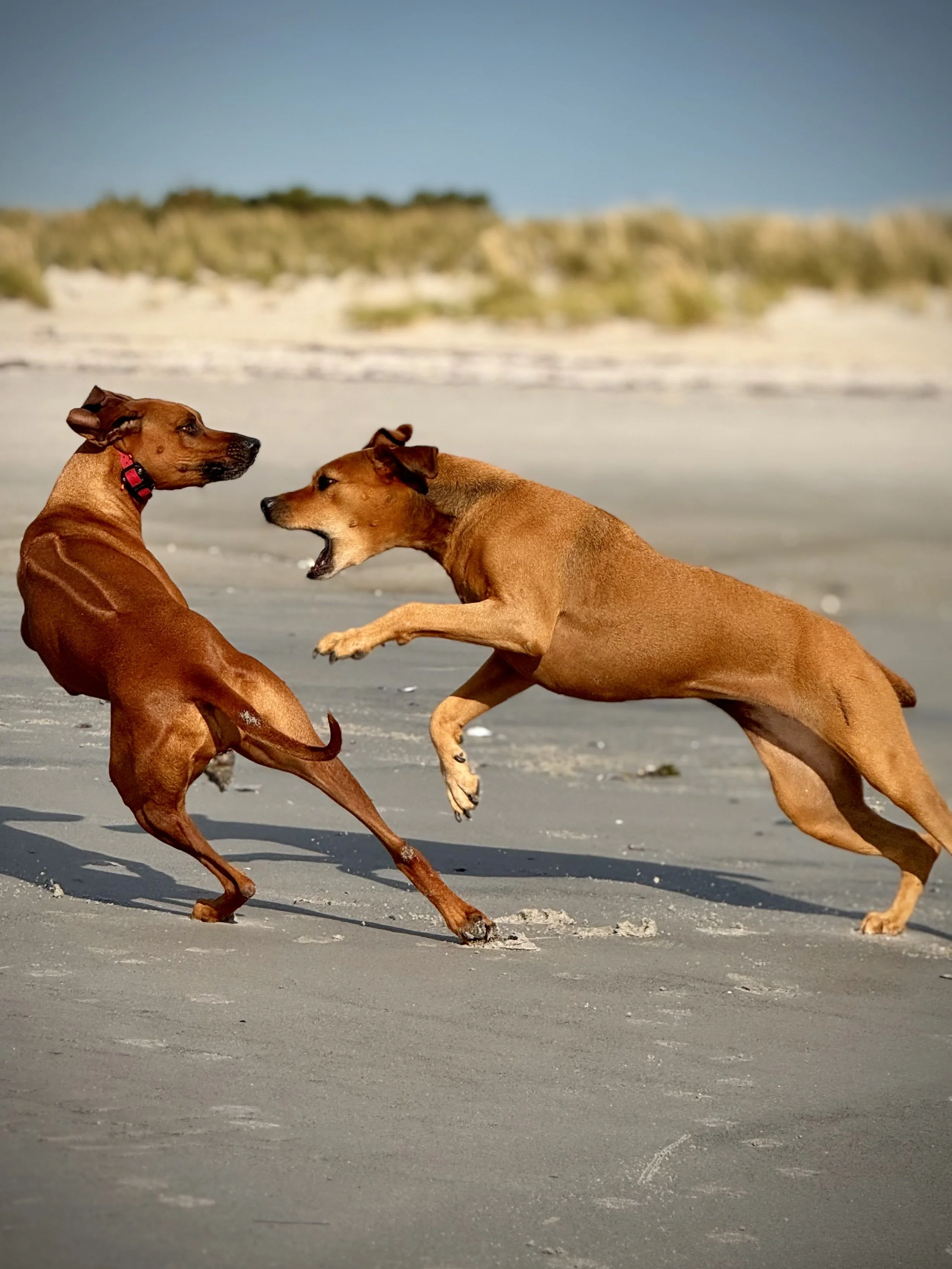
When properly introduced and used, an e-collar provides:
Reliable recall before a dog enters a nesting zone
Immediate interruption of chase behavior
Clear communication at a distance
The ability to maintain freedom without sacrificing environmental responsibility- Using the E Collar Technologies system gives you up to a ½ mile range of communication with your dog. That’s great range!
This is especially important in coastal environments where:
Boundaries are not visible- even with signage from local volunteers and organizations, sometimes we just stumble upon a sensitive area; when we can identify these fragile zones, we’re already one step ahead.
Wildlife is camouflaged- have your dog avoid the dunes all together
Timing is critical- anticipate your dog’s movement, understand their personality, and stay ahead of any distractions that may pull them into the dunes
Understanding the Landscape
Maine’s coastline is not just a destination—it is a functioning ecosystem made up of:
Dune systems that prevent erosion
Nesting grounds for threatened bird species
Feeding zones that support migration cycles
The Role of the Handler
Responsible off-leash freedom requires:
Situational awareness, reliable recall, and the ability to interrupt behavior immediately. You know your dog best, and you know yourself even better! Be honest with yourself and where your dog is at with their training. It’s okay to not be perfect everyday, but when we know better- we do better, and in this environment, we can have a significant impact in the state we love so much.
Freedom is not the absence of structure—it is the result of it.
Why Communication Matters
In open environments like beaches, there are no physical boundaries.
Dogs rely on: Instinct, movement, environmental stimulation.
Without clear communication, they will make decisions independently. Our role is to help our dogs navigate in these spaces as needed to ensure they are set up for success. Using an e collar is a balance, allowing your dog to make their own decisions- but having a seat belt if they are about to make a wrong one.
E-Collar as a Communication Tool
The e-collar is often misunderstood because of how it has been used, not because of what it is capable of.
At its core, an e-collar is not a shortcut, and it is not a replacement for training. It is a communication tool that extends your reach, allowing you to maintain a clear line of communication with your dog in environments where voice, body language, and leash pressure are no longer effective.
What It Is
When properly introduced, the e-collar functions as:
A low-level tactile signal your dog has been conditioned to understand
A way to reinforce behaviors your dog already knows
A consistent form of communication that does not rely on proximity
The goal is not compliance through force.
The goal is clarity through consistency.What It Is Not
An e-collar is not:
A tool for teaching new behaviors
A punishment for disobedience
A replacement for foundational leash work
A solution for untrained or unprepared dogs
Without proper conditioning, the tool has no meaning—and misuse can create confusion rather than communication.Seasonal Awareness
The Standard
Before off-leash access in sensitive environments, dogs should be able to:
Recall immediately from distance
Recall off wildlife
Remain neutral to people and dogs
Maintain proximity without constant correction
Final Note
Your dog’s freedom is directly tied to your ability to communicate.
The more clearly you communicate, the more access you create—not just for your dog, but for everyone who shares these spaces.
Off-leash freedom is a privilege not a right.