
Thatcher, Accountability, and the Conversations That Followed
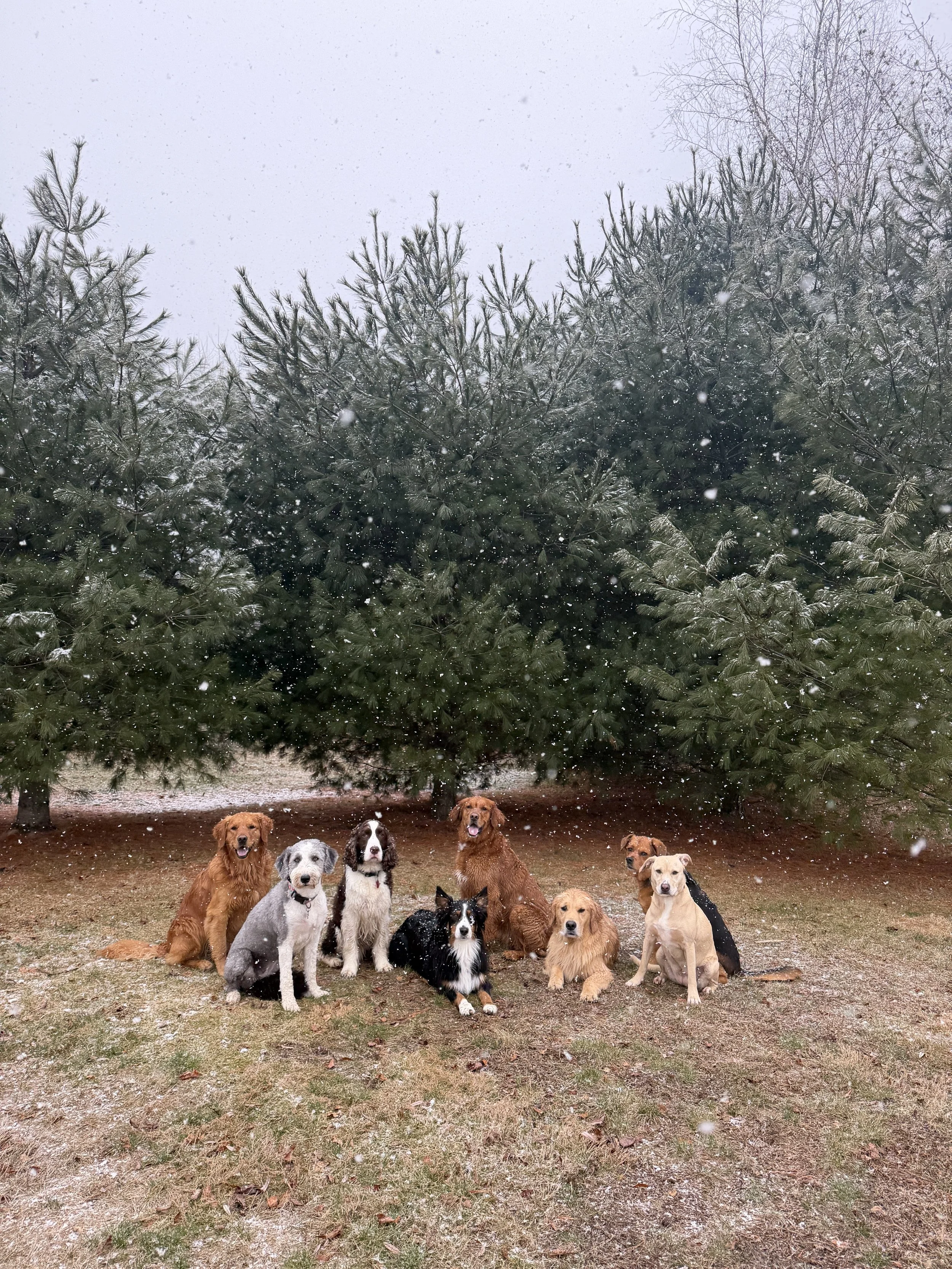
A personal statement from Samantha Herrick, founder of Timberline Treks
There are some experiences that change you permanently. Thatcher’s death is one of them.
Since that day, I have spent an extraordinary amount of time reflecting on what happened, the decisions that were made, the conversations that followed, and what it means to continue operating a business built around the care of other people’s dogs.
I have also watched an intensely personal tragedy become a public conversation about my character, my professional judgment, and whether I have taken accountability.
I recognize that Michael and Meredith have every right to share their experience. They underwent a great loss, and nothing I say here is intended to diminish that loss.
But with so much discussion taking place publicly, I feel it is important to share my perspective, provide context for the communication that has taken place since Thatcher’s death, and explain how I have approached moving forward.
The day Thatcher disappeared
I have replayed that day in my mind more times than I could possibly count.
When I realized Thatcher was missing, I genuinely believed I would find him.
That confidence was not indifference to the situation or a failure to appreciate how much he meant to his family. It came from my previous experience working with dogs in the Maine woods, navigating unexpected situations outdoors, and relying on the knowledge and judgment I had developed through years of operating Timberline.
I was trying to assess an unfolding situation in real time, drawing on my experience and the procedures we had developed for responding to unexpected situations.
I remember standing at the trailhead and telling Michael and Meredith, “We will get him back.”
I believed those words when I said them.
I was not trying to offer false reassurance. I was expressing the confidence I genuinely felt that we would be able to locate Thatcher and bring him home.
During the search, Thatcher had reportedly been spotted twice by people he knew. Those sightings gave me tremendous hope that we were getting closer to bringing him home.
At one point, I received what I believed was a promising tip: someone claimed Thatcher was safe and that they would meet us to return him.
I remember thinking, This is it. He’s safe. We did it.
For a moment, I felt like I could finally release some of the tension that had been building inside me. I genuinely believed we were about to bring Thatcher home.
Then came the request for money through Zelle or Venmo.
I was running along the side of the highway between exits 42 and 44 when I was picked up. As the reality of that message began to sink in, the relief I had felt just moments earlier disappeared.
It was like being hit by a freight train.
I had gone from believing that the nightmare was finally over to realizing that someone might have been exploiting an incredibly desperate situation.
I cannot adequately describe what that emotional shift felt like. The exhaustion, the adrenaline, the hope, and then the crushing disappointment.
But even after that, I continued believing we could find him. I wasn’t ready to give up on bringing Thatcher home.
As the search continued, the situation became far more devastating than I could have ever imagined.
There is a profound difference between operating while you believe a positive outcome is still possible and looking back on the decisions that were made, knowing how the story ends.
I can explain what I believed and what I was trying to accomplish without suggesting that the outcome was acceptable or that every decision is beyond reflection.
I have spent months considering those decisions, including the timing of communication with Thatcher’s family. As I shared in my July correspondence, there are aspects of that day I wish had unfolded differently.
My confidence that I would find Thatcher was sincere. It was never an effort to hide what was happening, avoid difficult conversations, or disregard his family’s right to know.
I understand that the family experienced the timing of that communication very differently, and I respect how painful that was for them.
Nothing about my intentions changes the fact that Thatcher did not come home.
That is something I will carry with me.
The weight of losing Thatcher
I also want to acknowledge something that has been incredibly difficult to put into words: how profoundly this has affected me as a person.
In all my years of working with dogs, I have never experienced a loss like this. Nothing in my personal or professional life prepared me for the devastation of Thatcher’s death.
I thought I understood grief. I thought I understood pain and suffering. But this introduced me to an entirely different kind of sadness, one that I have struggled to even articulate.
There have been moments when the weight of it has felt almost impossible to carry.
I have spent countless hours replaying that day, thinking about Thatcher, his family, and the terrible reality that he is no longer here. I have sought support through therapy and made a conscious effort to take care of myself, to process what happened, and to find a way to continue moving through life without pretending that everything is fine.
And I want to be clear: I am not sharing this to compare my grief to Michael and Meredith’s. They have to live with his absence in a way that I cannot fully understand, and I would never suggest otherwise.
But I am also a human being who loved Thatcher, who cared for him, and who has been deeply affected by his death.
I think sometimes, when something becomes a public conversation about a business, people forget that there are actual people behind it. People who feel things deeply, who struggle, who seek help, and who are trying to make sense of something they never imagined experiencing.
I have never wanted sympathy to replace accountability. I have never believed that my sadness somehow changes the circumstances of Thatcher’s death.
But I also don’t believe that taking accountability requires me to pretend this hasn’t been one of the most devastating experiences of my life.
It has, and I’m still learning how to carry it.
What accountability means to me
One of the most difficult aspects of the public discussion has been the repeated suggestion that I have refused to take accountability.
I think it is important to explain what accountability has meant to me, because I do not believe it is defined by a single public statement, an apology, or whether every person agrees with the decisions I make afterward.
For me, accountability means being willing to examine my decisions, engage with difficult questions, evaluate my practices, continue taking responsibility for the work I do, and make changes when necessary.
It means understanding that professional judgment is something I must continually develop. It means recognizing that experience does not make anyone infallible. And it means being willing to make changes when an experience causes me to reconsider how I operate.
Since Thatcher's death, I have spent considerable time reviewing Timberline's policies, procedures, daily programming, and approach to emergency response.
Timberline has an established employee handbook containing written standard operating procedures, safety protocols, and expectations for our staff. These are documented procedures that employees can reference, not simply verbal instructions or practices left to memory. I think it's important to make that distinction, particularly when discussing the operational structure of a small business.
I have significantly reduced the overall volume of Timberline's operations and restructured our programming. I have also revisited how we approach risk assessment, communication, and decision-making in the field.These changes reflect the ongoing evolution of the business and my commitment to providing thoughtful, attentive care. They are not intended to suggest that any particular change could have guaranteed a different outcome that day. Nor are they offered as a substitute for acknowledging the family’s loss.
They are part of my responsibility to continue learning and evaluating the work I do.
I also want to clarify something that has been repeated in the public discussion: the suggestion that I made a series of specific promises about what accountability would look like going forward.
That is not how I remember our conversations, and it is not an accurate reflection of the commitments I intended to make.
What I promised was that Thatcher would not be forgotten. That his death would not be in vain. And that this experience would be one of the most impactful learning moments of my entire life.
I meant every word of that. I still do.
I did not promise that I would close Timberline, withdraw from entire communities, or agree to every measure that might subsequently be requested of me. My commitment was to take what happened seriously, examine my decisions, continue learning, and carry Thatcher’s memory into the way I approach my work for the rest of my life.
I recognize that Michael and Meredith may have understood those conversations differently, and that they may have hoped for particular actions that I have not taken. But I believe it is important to distinguish between the commitments I actually made and expectations that developed afterward.
Why I prioritized personal conversations over repeated public statements
I also want to address the idea that accountability required me to make repeated public statements about Thatcher’s death.
That was not how I chose to approach this.
Immediately following Thatcher’s death, I shared an Instagram post acknowledging what had happened.
Shortly afterward, I received a text message from Meredith, which prompted me to make adjustments to the post. I also made the decision to remove the post and block Michael and Meredith from Timberline’s Instagram account. At the time, I genuinely believed that limiting their exposure to our social media presence would be a considerate way to give them additional space as they navigated their grief.
These decisions were made in an effort to respect their need for space and minimize painful reminders of Timberline, not to conceal what had happened. I have since restored the original post as questions have continued to circulate about whether I was attempting to hide the incident.
I also published a separate post discussing a new chapter for Timberline and the changes to our programming.
Beyond social media, I sent multiple newsletters to our client community discussing Thatcher’s death, the impact it had on us, and the direction of the business moving forward.
Our active clients were informed of Thatcher’s death beginning the following day. I wanted the families who entrusted their dogs to our care to hear directly from us about what had happened, rather than learning about it through speculation or social media.
And perhaps most importantly, I prioritized face-to-face conversations.
I made myself available to clients who wanted to sit down, ask questions, express concerns, or better understand what had happened and how we were moving forward. Many of those conversations took place, and they were incredibly difficult and emotional.
These were not easy discussions. They involved people who love their dogs, who trusted me with their care, and who understandably had questions about an outcome that none of us ever imagined.
But I believed those conversations deserved time, care, and genuine human connection.
I did not want Thatcher’s death reduced to a carefully worded public relations statement while the families who were actively entrusting their dogs to me were left without an opportunity to speak directly.
For me, accountability was not about how many times I publicly repeated an apology. It was about being available to the people affected, listening to their concerns, answering their questions, and taking those conversations seriously.
I recognize that some people may have preferred a more extensive public statement sooner. I understand that perspective.
But the absence of repeated public posts should not be mistaken for an absence of communication.
And because Michael and Meredith had specifically requested space, I did not believe it would be respectful or appropriate to contact them repeatedly with updates about every conversation I had with clients.
I was trying to honor their request while also fulfilling my responsibilities to the families who continued to participate in Timberline’s programming.
Those conversations happened, even if they were not visible to the broader public.
I understand that Michael and Meredith may define accountability differently. I recognize they may never feel my response has been sufficient.
But disagreement over what accountability should look like is not the same thing as an absence of accountability.
The nature of Timberline’s programming and transparency with clients
I founded Timberline Treks in 2022 out of a genuine love for my own dogs, the Maine woods, and the opportunity to spend more of my life outside rather than behind a desk.
What started as a way to build a life around something I genuinely loved eventually grew into a business that allowed me to share those experiences with other dogs and their families.
I have never marketed or represented myself as a professional dog trainer, whether through Timberline’s website, social media, client communications, or even in personal conversations with peers in the dog care industry. In fact, I’ve always been very clear about that distinction.
I am a dog walker. I am an outdoor enthusiast who genuinely loves dogs and saw an opportunity to build a life around spending time outside with them.
Timberline was never founded with the intention of becoming a professional dog training business. It grew organically from my love for my own dogs, my desire to step away from a traditional office environment, and the realization that I could share the outdoor experiences I valued so much with other families and their dogs.
That doesn’t mean I don’t take my professional responsibilities seriously or that I haven’t invested time in developing my knowledge of canine behavior, handling, and outdoor safety. It simply means I’ve never claimed credentials or a professional identity that I do not hold.
Timberline has always been presented as an off-leash canine excursion service, and I have never attempted to conceal how our programs operate.
In fact, transparency has been a fundamental part of the way I communicate with clients.
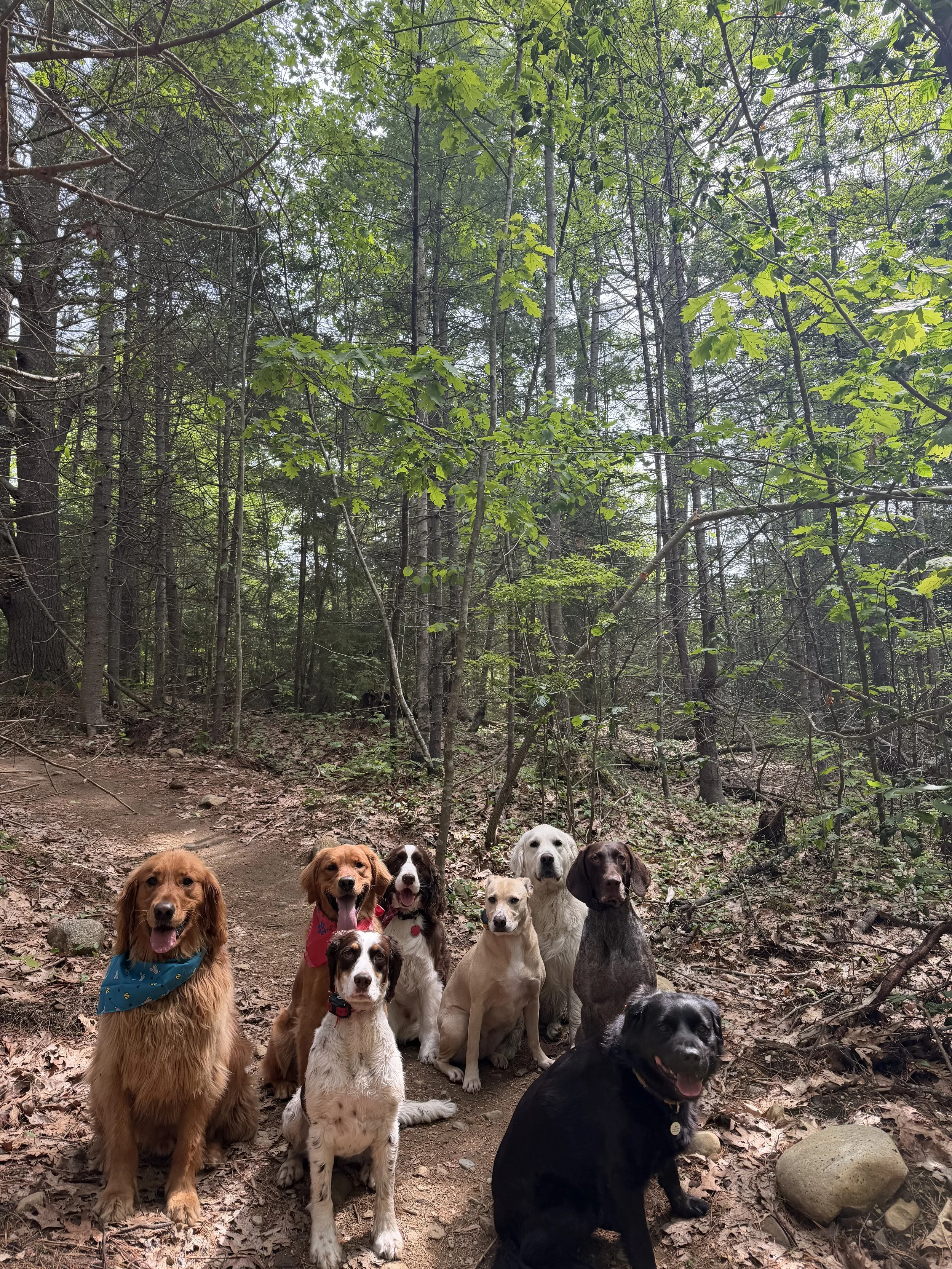
Following every group program, I send photographs directly to the participating families. Those photographs show the dogs enjoying their time outside together and provide a regular window into what our excursions look like, including the number of dogs participating and the handler accompanying them.
Our website and social media have also consistently featured photographs and videos of our programming. The nature of our excursions, the environments we recreate in, and the dogs participating have never been hidden from public view.
I’ve also regularly encouraged clients through our newsletters to reach out with any questions, comments, or concerns. My phone number and email have always been available, and I have consistently welcomed conversations about our services, our practices, and the individual needs of the dogs entrusted to us.
To my recollection, prior to Thatcher’s death, I had never received feedback from a client expressing discomfort with our group sizes or handler-to-dog ratios, including from Michael and Meredith.
In fact, the feedback I typically received when people saw me out with multiple dogs was along the lines of, “That’s amazing how well-behaved they are with you.” These comments were generally expressions of admiration for how the dogs interacted and responded to me, rather than concerns about the number of dogs participating.
I’ve always welcomed questions and constructive feedback from clients. Had someone expressed discomfort with their dog participating in a particular group, I would have been more than willing to discuss alternatives, whether that meant a different day, a smaller group when available, or another arrangement that better suited their comfort level.
Every dog is different, and every family has different expectations. I’ve always tried to be accommodating and maintain open communication so that clients feel comfortable discussing their dog’s experience with me.
That openness has been a consistent part of how I’ve operated Timberline. Clients receive photographs from our excursions, have access to me through phone, text, and email, and are regularly encouraged to reach out with questions, comments, or concerns. I have never wanted anyone to feel that they couldn’t have a conversation with me about how their dog was being cared for.
Families have always had the ability to decide whether Timberline’s services were the right fit for their dogs. Participation has been voluntary, and clients have been able to communicate changes to their schedules or discontinue services if they no longer felt comfortable.
Our onboarding process has always included conversations about the nature of off-leash recreation, our operating practices, and the risks associated with spending time in outdoor environments. Our service agreement also addresses those risks.
Those conversations have never been limited to a generic warning that outdoor activities carry some degree of risk.
I’ve always been forthcoming with clients about the injuries, unexpected encounters, and sometimes downright unbelievable situations I’ve experienced while working with dogs in the Maine woods.
Over the years, those experiences have included encounters with hunters, porcupines, three bears, and, more recently, a fishing lure embedded in a dog’s paw.
I’ve seen firsthand how quickly an otherwise wonderful day outside can take an unexpected turn. A dog can be happily exploring one moment and encounter a porcupine the next. A paw pad can tear, a nail can rip, or a seemingly harmless object on the trail can become an injury.
These are real experiences I’ve had, and they’re the kinds of things I discuss with families because I want them to understand the environments their dogs will be exploring.
When I’ve used the expression “dogs will be dogs,” this is the context I’ve been trying to convey.
Dogs are curious, physical, instinct-driven animals. They explore with their noses, investigate unfamiliar things, run through uneven terrain, and sometimes find themselves in situations we would never have anticipated. Dogs can be unpredictable, even when they’re well-trained.
That doesn’t mean every accident is unavoidable, that every outcome is acceptable, or that the person responsible for a dog is relieved of their obligation to exercise appropriate care.
It means that even with preparation, experience, and thoughtful decision-making, outdoor recreation can present circumstances that are difficult to predict.
I believe being candid about those realities is an important part of helping families make informed decisions about their dogs’ participation.
I’ve never represented the Maine woods as an environment where every variable can be controlled or every outcome guaranteed. But I have always taken seriously my responsibility to prepare for those environments, manage the risks within my control, and respond thoughtfully when unexpected situations arise.
I also recognize that the ordinary injuries and wildlife encounters I’ve described are not equivalent to Thatcher’s death. I am not sharing those examples to diminish what happened to him or suggest that his death was simply another expected part of outdoor recreation.
I’m sharing them to explain the conversations I’ve consistently had with clients and what I’ve meant when discussing the unpredictable nature of spending time outside with dogs off-leash.
There is an important distinction between acknowledging that risks exist and dismissing the consequences when something goes wrong.
I have never wanted families to feel that the risks of outdoor recreation were being hidden from them. I’ve wanted them to understand what we do, what their dogs may encounter, and why I believe these experiences can be so valuable despite the challenges that sometimes accompany them.
Timberline has grown and evolved over the years, and I have continued to learn. I am proud of what this company has become, while also recognizing that experience, passion, and good intentions do not make anyone immune to human error or the responsibility to examine their practices.
I have always wanted families to feel comfortable asking questions, raising concerns, and making informed decisions about their dogs’ participation.
That commitment to openness remains unchanged.
My communication with Thatcher’s family
There has also been considerable discussion about whether I have avoided communication or attempted to conceal what happened.
I believe the history of our correspondence provides important context.
Following Thatcher’s death, Michael and Meredith asked me for space.
I respected that request.
My decision not to repeatedly initiate further conversations was not an attempt to avoid difficult questions. It was an effort to honor the boundaries they had communicated during an extraordinarily painful time.
I was also asked to adjust certain social media content. I honored those requests, including removing posts.
Those decisions were made in response to the family’s wishes, not as an attempt to erase Thatcher’s death or conceal the circumstances surrounding it.
I understand that my actions may have been interpreted differently. But I believe it is important to distinguish between deliberately withholding information and making decisions intended to respect someone’s stated boundaries.
I have communicated about his death, reflected on the circumstances, and continued evaluating Timberline’s operations.
The request concerning South Portland and Cape Elizabeth
Another important part of our correspondence involved a request that Timberline discontinue operations in South Portland and Cape Elizabeth for at least one year.
Michael and Meredith explained that seeing our branding and encountering reminders of Timberline was deeply distressing, and that distance from the business would help them navigate their grief.
I took that request seriously.
In their email, Michael and Meredith also wrote:
“We have not spoken poorly about Timberline Treks or shared the facts of the day publicly on social media or in any business reviews, and we hope you’ll consider that when you weigh your decision.”
They also requested a response by Tuesday, explaining, “It will inform our next steps.”
I understood that their decision not to share their experience publicly was something they wanted me to consider when responding to their request. I took their words seriously and understood that my response would influence how they chose to proceed.
Ultimately, however, I could not agree to withdraw Timberline from those two communities.
Timberline is a small, independently owned Maine business. I have longstanding relationships with clients in those areas, including families who truly rely on our services, and I employ someone whose livelihood depends on the continued operation of the company.
That responsibility matters deeply to me.
I have been immensely proud of our ability to provide a livable wage here in Maine, along with the flexibility for our employee to support his own family while pursuing his college education. In a state where the cost of living continues to rise, that is no small feat, especially for a small, independently owned business.
Being able to provide meaningful employment, financial stability, and the flexibility to pursue an education is something I take tremendous pride in. These are real responsibilities to another person and his family, and they deserve to be considered when making decisions that could affect the future of Timberline.
Leaving two significant portions of our service area would have consequences extending beyond me. It would affect the families who depend on our services, the financial sustainability of Timberline, and likely my employee’s ability to continue working with us.
I did not believe I could make that decision without considering those responsibilities.
But I also did not simply dismiss the family’s request.
I proposed alternatives intended to reduce the likelihood of unwanted encounters, including using unmarked vehicles, reducing visible branding, and proactively avoiding their immediate area whenever reasonably possible.
These were not simply proposed accommodations. I have already been making a conscious effort to avoid areas associated with the family’s daily routines, including adjusting our routes to maintain additional distance whenever reasonably possible.
These adjustments have been ongoing efforts to respect the family’s request for space while continuing to fulfill our commitments to other clients in South Portland and Cape Elizabeth.
I recognize that those accommodations were not the resolution Michael and Meredith had hoped for.
But my inability to agree to every request should not be confused with an unwillingness to listen, consider alternatives, or acknowledge the pain behind those requests.
I was trying to balance several serious responsibilities in an extraordinarily difficult situation.
A conversation I will never forget
There is something else I want to share because it has stayed with me since the day Thatcher disappeared.
During the search, I remember questioning whether I should continue operating Timberline at all.
I was devastated, frightened, and struggling to comprehend what was happening.
In that moment, Michael and Meredith extended compassion and encouragement to me. They expressed that our work was having a positive impact on other families and encouraged me not to abandon it.
I have carried that conversation with me ever since.
Their kindness during such an unimaginably painful experience affected me more deeply than I can adequately express.
It changed the way I thought about compassion, grief, and the grace people can extend to one another even in terrible circumstances.
I understand that feelings can change over time.
I understand that grief evolves, that perspectives shift, and that the kindness someone offers in one moment does not prevent them from feeling anger or disappointment later.
I do not share this to suggest that Michael and Meredith are obligated to feel the same way today.
I share it because their words mattered to me.
They became part of my determination to continue contributing something positive to our community, even while carrying the weight of what happened to Thatcher.
When private grief becomes public
The public discussion surrounding Thatcher’s death has been deeply unsettling.
I recognize and respect criticism when it comes from a place of compassion and a genuine desire to understand what happened. Questions about professional responsibility, safety, and accountability deserve to be taken seriously. I also recognize Michael and Meredith’s right to share their experience and express their grief.
But some of the commentary that has emerged alongside those conversations has left me genuinely concerned for my personal safety.
I’ve seen comments on social media calling for things like “social pressure” and “street justice.” What has unfolded around these conversations has, at times, felt like outright cyberbullying. These are not simply disagreements or expressions of criticism. The hostility, personal attacks, and encouragement of public confrontation have been deeply unsettling, particularly when directed toward a real person living and working in the same community as the people participating in these discussions.
I don’t know what every person intends when they use those words. But I do know how it feels to read them.
At times, this entire experience has felt like living in an episode of Black Mirror, where an intensely personal tragedy becomes a form of social media justice, and people who have never met you feel increasingly comfortable deciding what consequences you deserve.
The speed at which anger can spread online, the assumptions that become accepted as facts, and the encouragement people can receive for escalating their language have been frightening to witness.
I was born and raised in Maine.
The woods here have been my refuge for as long as I can remember. Long before they became the foundation of my livelihood, they were where I found peace, perspective, and a sense of belonging.
To now find myself worried about encountering someone who recognizes me from social media, or concerned that an ordinary interaction on a trail could become confrontational, is something I never imagined experiencing.
I want to be careful to distinguish between the comments made by individuals online and the intentions of Michael and Meredith. I cannot speak for what they believe or endorse simply because a comment appears on a post they have shared. In fact, after I expressed concerns about my personal safety stemming from an older Protection from Abuse (PFA) order, Michael and Meredith took steps to remove references to my maiden name from reviews where they were able to do so. They also acknowledged that their intention was for this conversation to remain local, rather than become a worldwide phenomenon. I appreciated their willingness to listen to my concerns and make those adjustments.
But I can speak to the effect that this broader conversation has had on me.
I am not asking anyone to remain silent. I am not suggesting that criticism should be avoided, or that grief and anger need to be expressed in ways that make me comfortable.
I am asking that we recognize the difference between holding someone accountable and encouraging a public atmosphere in which intimidation begins to feel acceptable.
There are real people on every side of this tragedy. People with families, livelihoods, responsibilities, and emotional struggles that are not always visible through a screen.
I hope we can remember that, even when we disagree.
On other accounts that have surfaced
As the public conversation surrounding Thatcher’s death has grown, other individuals have begun sharing their own experiences with Timberline, including an encounter on a trail that I remember vividly.
I find it particularly unfortunate to see this account being circulated as fact when, to my recollection, it is simply not an accurate representation of what happened that day. What makes it even more disappointing is that this individual and I actually spoke afterward, and I walked away from that conversation believing we had reached a constructive understanding.
I remember seeing her and her husband ahead of us on the trail, with approximately 40 yards of clear visibility as we approached one another. There was no communication expressing discomfort or requesting that the dogs be leashed until we were immediately beside one another.
During that conversation, we both acknowledged that we had been having difficult days. She shared some of the personal challenges she was navigating, and I explained that I had also been having a challenging day. While neither of those circumstances excuses an unpleasant interaction, I appreciated the opportunity to better understand where she was coming from.
I also explained that her vehicle had been parked directly beside my clearly marked Timberline van at the trailhead. My contact information was displayed on the vehicle, and I told her that if she ever arrived at a trailhead in the future and saw my van, she was more than welcome to call me directly.
And I meant that sincerely.
If she was uncomfortable sharing the trail with our dogs, I would have been more than willing to adjust our plans, leave the trail system, relocate, or ensure that our paths did not cross. If we encountered one another unexpectedly, I would also be willing to leash the dogs and create additional space, as we always do at the request of others.
I believe public trails are meant to be shared, and I recognize that not everyone enjoys being around dogs. That’s perfectly reasonable. Even as someone who loves dogs, I don’t enjoy having unfamiliar dogs jump on me, and I understand that some people may feel uncomfortable around off-leash animals.
Working with dogs in public spaces has also taught me that people have very different feelings about dogs and dog walkers. Sometimes those interactions can be tense, even when everyone is simply trying to enjoy the outdoors.
That is precisely why I believe communication, mutual consideration, and a willingness to make reasonable accommodations are so important.
I left our phone conversation believing we had reached a better understanding. I had listened to her concerns, acknowledged that our interaction had been upsetting for her, and expressed that I understood her discomfort with encountering a dog walker on a public trail. I also made it clear that I would be willing to take proactive steps to avoid another uncomfortable encounter.
Seeing that interaction resurfaced in the context of Thatcher’s death, with details that do not align with the truth, has been disheartening.
I recognize that people can remember the same encounter differently. I am not suggesting that her discomfort was invalid, nor am I asking anyone to dismiss her experience.
But I also believe I have a right to correct statements that I do not believe accurately represent what occurred.
What troubles me about the broader online discussion is how quickly separate experiences can become folded into a collective narrative, where disagreement or clarification is sometimes interpreted as defensiveness rather than an effort to provide context.
The bandwagon effect of social media is real, and it can leave very little room for the nuance of an actual human interaction.
I wish I had responded with more compassion that day. I acknowledged that directly to her, and I believed our subsequent conversation was a positive step toward mutual understanding.
I still believe that respectful communication is a better way forward than allowing an unpleasant encounter to become another source of public hostility.
Moving forward
I have never claimed to be infallible.
I started Timberline because I loved my dogs, loved being outside, and believed that sharing those experiences with other dogs could bring something genuinely positive into people’s lives.
Over the years, that belief has grown into a business that supports my family, provides employment, and serves clients who have entrusted me with animals they love deeply.
That trust is something I take seriously.
Thatcher’s death has permanently affected me. It has shaped how I think about my work, my responsibilities, and every decision I make moving forward.
I recognize that my perspective and the family’s perspective may never fully align.
I am not asking anyone to overlook what happened, excuse the fragile outcome, or abandon legitimate questions about professional responsibility.
I am asking that my actions and intentions be represented accurately, that the full context of our communication be considered, and that accountability not be confused with an obligation to agree to every demand made of my business.
I will continue examining our practices, learning from our experiences, and working to provide thoughtful care for the dogs and families who trust Timberline.
And I will continue remembering Thatcher.
As I install a home surveillance camera system and find myself feeling the need to carry pepper spray while hiking through the very woods that have always brought me peace, I am confronted with just how deeply this experience has affected my sense of safety. It is a difficult reality to reconcile, especially in a place I have always considered home. But even as I take these steps to protect myself and my family, I will never waver in sincerely wishing Michael and Meredith peace and healing.
Samantha Herrick
Founder, Timberline Treks